
Blog
2026 Top Vinyl Player Turntable Buying Guide
A 2026 Vinyl Player Turntable should make records enjoyable, not turn setup into a guessing game. The right choice depends on your budget, speakers, listening space, and willingness to adjust equipment. A built-in phono preamp can simplify a first system. A removable cartridge may offer more room to upgrade later. Check the details: belt or direct drive, speed options, tonearm adjustment, and whether a dust cover is included.
Veteran audio reviewer Michael Fremer has often emphasized the importance of careful turntable setup. A practical paraphrase of that advice is: “Good setup lets the record speak clearly.” Treat that as guidance, not a direct quotation. Even a capable deck can sound thin or noisy if it sits unevenly or the cartridge is poorly aligned. Small adjustments matter. Sometimes more than expected.
This buying guide compares features that affect real listening, from motor noise to everyday ease of use. It also considers where spending more may help—and where it may not. A heavier plinth looks reassuring. It is not automatically the better choice. Your room, records, and patience count, too. We will cover beginner-friendly models, upgrade options, and common trade-offs, so you can choose a Vinyl Player Turntable that suits your habits rather than chasing specifications alone. One honest caveat: no single model is best for everyone.
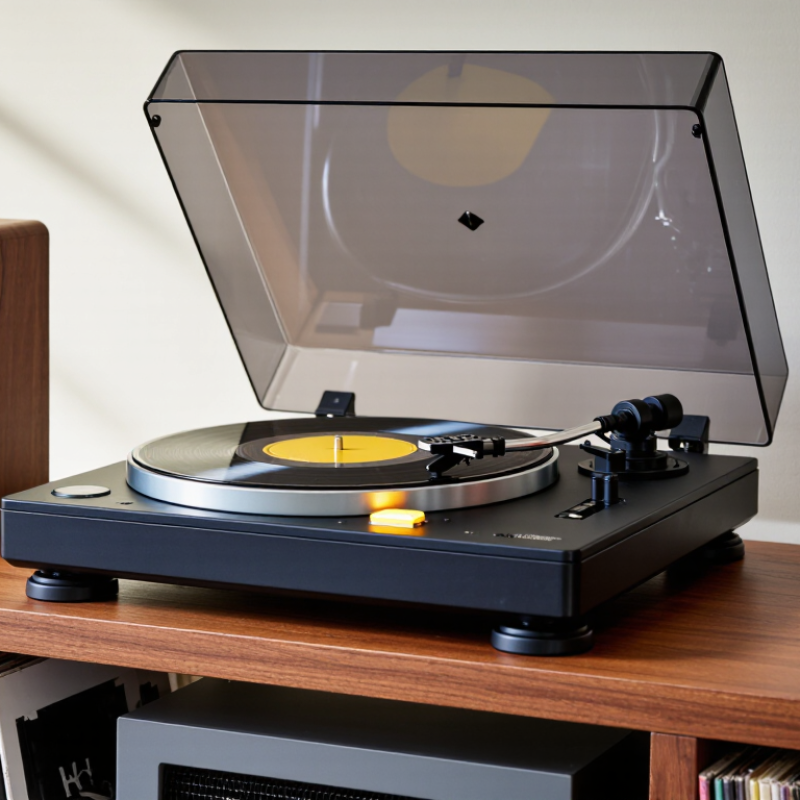
How a Vinyl Turntable Works
A turntable turns tiny groove movements into an electrical signal. As the platter rotates, a stylus follows the groove’s changing walls. Those movements are extremely small. The cartridge converts them into a signal, which travels through phono circuitry for amplification and equalization before reaching speakers. Correct speed matters: a platter running too slowly lowers pitch, while uneven rotation can make sustained notes waver. Keep the stylus clean and the record steady; dust can add clicks and interfere with tracking. The mechanism is clever, but not immune to setup mistakes.
The scale of renewed interest is measurable. The Recording Industry Association of America’s 2024 Year-End Music Industry Revenue Report put U.S. vinyl revenue at about $1.4 billion, its 18th consecutive year of growth. That figure does not explain sound quality, but it helps explain why basic setup knowledge remains useful. A level surface, a properly balanced tonearm, and the correct tracking force help the stylus follow the groove without unnecessary strain. Small adjustments matter. I have found that a slightly tilted shelf can make careful setup feel oddly frustrating; it is easy to blame the record instead. Check the surface before changing settings. The signal path is simple in principle, though the listening result depends on several delicate parts working together.
2026 Top Vinyl Player Turntable Buying Guide - How a Vinyl Turntable Works
| Topic | How It Works or What to Check | Practical Buying Guidance |
|---|---|---|
| Record and groove | A stylus follows the spiral groove in a record. Groove-wall movement creates mechanical vibration that the cartridge converts into an electrical signal. | Choose a turntable with a stable platter and a tonearm that can be adjusted to track the record correctly. |
| Drive system | Belt-drive models transfer motor power to the platter through a belt. Direct-drive models couple the motor more directly to the platter. | Both can play records well. Compare measured speed stability, operating noise, maintenance needs, and intended use rather than relying on drive type alone. |
| Playback speeds | Many records are designed for 33⅓ or 45 revolutions per minute (rpm). Some older records use 78 rpm. | Check that the turntable supports the speeds you need. Playing at the wrong speed changes pitch and playback duration. |
| Platter and mat | The platter supports and rotates the record. A mat sits between the record and platter and can help protect the record surface and reduce slipping. | Look for a level, steady platter and a mat that fits securely. A heavier platter is not automatically better; overall design and speed stability matter. |
| Tonearm and tracking force | The tonearm holds the cartridge and guides the stylus through the groove. Tracking force is the downward force the stylus applies to the record. | Prefer an arm with suitable adjustment and follow the cartridge maker's specified tracking-force range. Incorrect force can affect playback and record wear. |
| Cartridge and stylus | The cartridge turns stylus movement into an audio signal. The stylus is the part that contacts the record groove and gradually wears with use. | Check whether the cartridge is replaceable or upgradeable and whether replacement styli are readily available. Handle the stylus carefully and replace it when worn or damaged. |
| Phono preamplifier | A phono preamplifier boosts the cartridge's low-level signal and applies the standard playback equalization needed for connection to typical audio inputs. | If the turntable has a built-in phono preamp, it can connect to a line-level input. If not, use an external phono preamp or an amplifier with a phono input. |
| Output and connectivity | Turntables may provide analog outputs, a built-in preamp, or digital wireless connectivity. Connection options determine which speakers or amplifiers can be used. | Confirm the output matches your audio system. Wireless playback may be convenient, while a wired analog connection avoids wireless transmission in the signal path. |
| Automatic operation | Manual models require the listener to position and lift the tonearm. Automatic models perform some or all of these actions mechanically. | Choose the operating style that suits your routine. Automation adds convenience, while a simpler manual design may offer fewer mechanisms to operate or maintain. |
| Setup and placement | A level, stable surface helps the platter rotate evenly and the tonearm track consistently. Nearby speakers can transmit vibration back to the turntable. | Place the turntable away from strong vibration, level it before use, and follow the setup instructions for belt fitting, counterweight adjustment, and anti-skate if provided. |
| Essential accessories | A suitable phono preamp, amplifier or powered speakers, record brush, and replacement stylus may be needed depending on the turntable and existing audio equipment. | Check what is included before buying. Keep records clean and store them upright to help reduce dust, scratches, and playback noise. |
Note: Turntable features and compatibility vary by model. Check the product specifications and setup instructions before purchase.