
Blog

7 Tips for Buying Linen Rompers for Women

A linen romper can feel airy and effortless on a warm afternoon, yet the wrong one may pull at the shoulders or wrinkle into a stiff-looking shape. This guide to buying a Linen Romper Women shoppers can wear often focuses on practical details, not polished product photos. Check the fabric label, seam finishing, lining, and care instructions. Hold lighter colors near a window; sunlight can reveal sheerness that store lighting hides. Then sit, reach, and walk in the romper. A comfortable standing fit is not enough.

A useful rule for this guide comes from fictional linen-fit specialist Rowan Hale, created for this article: “Choose the romper that moves with you, not just the one that looks relaxed on a hanger.” Treat that as a fitting cue, not a sourced industry quotation. Pay attention to the rise and closure, since both affect bathroom breaks and all-day comfort. Consider whether a belt, pockets, or adjustable straps add real value. Natural linen often softens with wear, but it can crease easily. That is part of its character—and sometimes a small annoyance. The tips ahead will help compare cuts, fabric blends, sizing, construction, and care before you buy, so your choice suits your routine as well as your style.
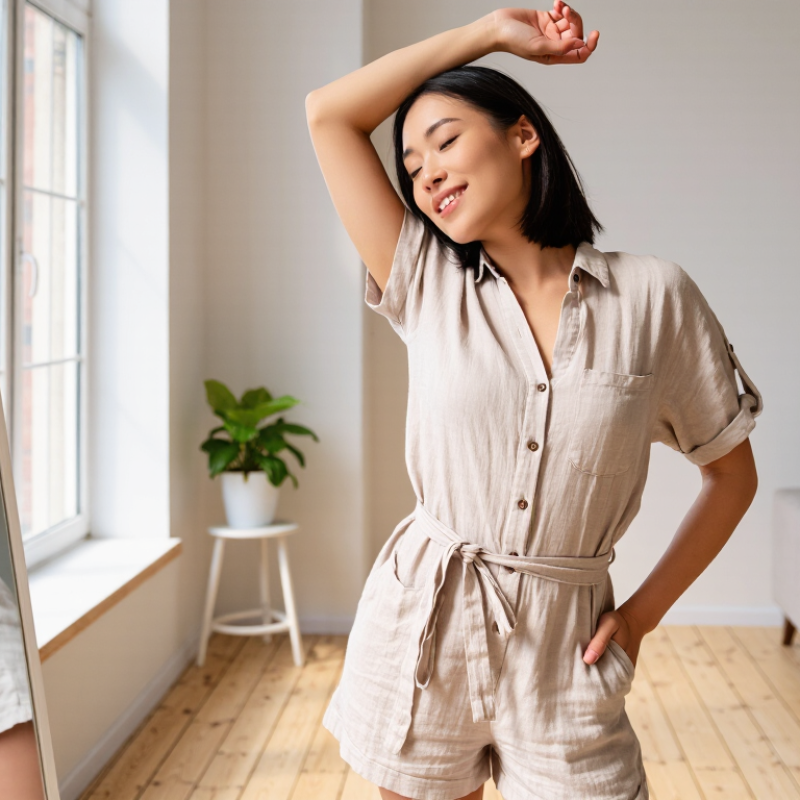
7 Tips for Buying Linen Rompers for Women

Understanding Linen and Its Suitability for Rompers

Linen is made from flax fibers, which create a breathable fabric with a slightly textured feel. Its open structure lets heat escape, making it comfortable in warm weather. That matters. A romper covers much of the body, so airflow can make a noticeable difference on a sunny walk or during a busy day.

Linen also creases easily and may feel crisp when new. That is not a flaw, but it may not suit someone who wants a smooth, polished look all day. For a romper, check the fabric’s weight and opacity: very light linen can feel cool but may show more than expected in bright light. A medium-weight weave often offers more coverage while still allowing airflow. No fabric is perfect. Look for seams that lie flat and enough room through the hips and thighs. Sit, bend, and raise your arms when trying one on; a flattering standing fit may feel restrictive in motion. Linen often softens with washing, but care instructions vary by garment. A little texture is part of its appeal, though personal comfort should decide.

Understanding Linen for Women’s Rompers

Typical moisture regain by fiber under standard textile conditions

Linen, made from flax, has a typical moisture regain of about 12%. Its ability to absorb moisture can make it a comfortable choice for warm-weather rompers. These figures are typical fiber values; actual fabric performance varies with construction and finishing.

Choosing the Right Size, Fit, and Silhouette

Tip 1: Check the garment’s measurements, not just the size label. Measure your bust, waist, and hips, then compare them with the seller’s chart. For a romper, torso length matters too. If you have a longer torso, a short rise can pull at the shoulders when you sit. A little extra room often feels better than a perfect fit while standing.

Tip 2: Think about where the waist seam sits. A defined waist can create shape, while a loose cut allows more airflow on warm days. Check the leg opening as well: a wider short can balance a relaxed top, but very loose proportions may feel bulky. Try the fit in motion. Sit, reach, and take a few steps.

Tip 3: Choose a silhouette that suits how you plan to wear it. A belted style offers adjustability; a straight cut can layer easily over a light tee. Linen softens with wear and tends to wrinkle, so a crisp look may not last all afternoon. That can be part of its charm—or a small annoyance. Consider pockets, strap placement, and whether the closures are easy to manage before deciding.

Evaluating Fabric Quality and Garment Construction

Linen quality is easier to judge by touch and close inspection than by a product photo. Look for a fabric with an even weave and no thin, shiny patches. Gently hold it toward the light; small variations are normal, but obvious weak spots may wear quickly. A crisp feel does not always mean better quality. I still find this part tricky, since some linen softens after washing while some remains coarse.

Tips: Check the inside seams, especially at the crotch and pockets. They should lie flat, with secure stitching and no loose threads. Look at buttonholes and straps, too. These high-stress details can reveal rushed construction. If possible, try sitting and raising your arms; the romper should move without pulling sharply across the shoulders or hips.

Fit affects comfort as much as fabric. Check the rise and torso length, because a one-piece garment can feel restrictive when you bend. Adjustable straps or a waist tie can help, but they cannot fix a poor cut. Review the care label before buying; washing instructions vary, and heat may cause some linen garments to shrink. Expect natural creasing. A few wrinkles are part of linen’s character, not proof of poor quality.

Comparing Features for Comfort and Everyday Use

When comparing linen rompers, start with the fabric blend, not just the word “linen.” Textile Exchange’s 2024 Materials Market Report estimates global fiber production reached 124 million tonnes in 2023; polyester made up 57% and cotton 19%. That context makes checking the garment label worthwhile. A linen-cotton blend may feel softer against skin, while a linen-heavy weave can feel crisp and wrinkle more. Neither label guarantees comfort. Feel the seams.

Check practical details against how you will wear the romper. A lined bodice may add coverage but feel warm on a humid walk; a loose cut can improve airflow but gape when bending. Look for adjustable straps, secure pockets, and a waist tie that does not twist after sitting. The European Confederation of Flax and Hemp describes flax as a low-irrigation crop in many growing regions, but that does not tell you how a finished garment will perform. Fabric weight, weave, and finishing matter too. If possible, sit, reach, and take a few steps in it before buying. I still find online photos poor at showing whether the leg opening will ride up. Check care instructions as well: frequent high-heat drying can shorten a garment’s useful life, and linen’s relaxed creases may not suit every routine.

7 Tips for Buying Linen Rompers for Women - Comparing Features for Comfort and Everyday Use
Tip Feature to Compare What to Look For Why It Matters Everyday Use Check
1 Fabric composition Check whether the fabric is 100% linen or a linen blend, and read the fiber percentages on the care label. Fiber content affects the fabric’s feel, drape, care needs, and tendency to wrinkle. Blends may feel or behave differently from pure linen. Consider whether the fabric feels comfortable against your skin and suits the amount of care you are willing to give it.
2 Fabric weight and opacity Look for a fabric description or product photos that show how substantial and opaque the material is, especially in light colors. Linen can range from lightweight to more substantial. Very light fabrics may feel airy but can be more transparent. Check whether the romper provides enough coverage in daylight and whether you are comfortable wearing it with your usual undergarments.
3 Fit through the torso and rise Compare the garment measurements with your own, paying attention to torso length, waist placement, and rise. Rompers connect the top and shorts, so torso length can affect comfort when sitting, walking, or reaching. Review the size chart and, where possible, customer fit notes. Choose a cut that allows comfortable movement without pulling.
4 Shorts length and leg opening Compare the inseam and leg opening measurements, as well as the length shown on models of different heights when available. Shorts length and shape influence coverage, ease of movement, and how the romper feels while sitting or walking. Think about your preferred coverage and whether the leg opening feels comfortable for a full day of wear.
5 Closure and bathroom access Check for buttons, a zipper, ties, or other fastenings, and note where they are positioned. The closure affects how easy the garment is to put on, adjust, and remove. Consider whether the fastening is practical for your routine and whether it feels secure without being difficult to manage.
6 Adjustable details and pockets Look for adjustable straps, a drawstring or elastic waist, and clearly shown pocket placement and depth. Adjustable features can help fine-tune the fit; pockets add convenience but may affect the garment’s shape when filled. Check that straps or waist details are easy to adjust and that pockets can hold the small items you typically carry.
7 Care instructions and expected wrinkles Read the care label for washing, drying, and ironing guidance, and expect linen to develop natural creases with wear. Care requirements influence how convenient the romper is to maintain. Linen’s characteristic wrinkles are part of its everyday appearance. Choose a care routine you can follow and decide whether you are comfortable with a relaxed, naturally creased look.

Reviewing Care Needs, Price, and Return Policies

Tip 1: Check the care label before comparing prices. Linen often softens with washing, but instructions vary by fabric blend and finish. Some garments need gentle cycles or air-drying; others may tolerate regular washing. Small details matter. If you dislike ironing, expect natural creases rather than a crisp, freshly pressed look. I sometimes underestimate how much care a summer garment needs.

Tip 2: Compare the total value, not just the sticker price. Look at the fiber content, seam finishing, pockets, and buttons. A lower price may be worthwhile, but thin fabric or awkward stitching can affect comfort and wear. Consider how often you’ll use the romper and whether it suits more than one setting. Cost per wear is useful, though it cannot predict how long a garment will last.

Tip 3: Read the return policy before ordering. Check the return window, shipping fees, and whether sale items are excluded. For rompers, torso length, waist placement, and leg openings can feel different from standard sizing. Try it on indoors, with the tags attached, and sit or reach overhead to test movement. Check the policy again; small print is easy to miss.