How to Choose the Best Kids Puzzle Toys for Any Age?
Choosing the right Kids Puzzle Toys is not simply about counting pieces. A three-year-old may enjoy a chunky wooden farm puzzle, while an eight-year-old may need a complex logic board. Age, ability, attention span, and personal interests should guide the decision. A puzzle that feels exciting can build confidence. One that feels impossible may quickly become shelf decoration.
Look closely at materials, construction, and safety information. Smooth edges, securely attached pieces, and non-toxic finishes matter during everyday play. Small pieces require careful supervision, especially around younger children. Reliable age labels are useful, but they are not perfect. Parents and educators should also observe how a child handles challenge, frustration, and independent problem-solving. A child who completes a puzzle quickly may need more layers, not merely more pieces.
The best choice often grows with the child. Look for clear pictures, varied textures, or adjustable difficulty when possible. For example, a transport-themed puzzle may invite a reluctant child to sit longer and notice shapes. Watch the process, not only the finished picture. Does the child rotate pieces, ask questions, or invent a different solution? These details reveal more than packaging claims. Expert recommendations can help, yet real experience at home remains valuable. I have seen beautifully designed puzzles ignored when the theme felt irrelevant. That reminder matters: “educational” does not guarantee engagement. This guide explores how to match Kids Puzzle Toys with different ages, abilities, and play styles, while keeping safety, enjoyment, and realistic expectations at the center.
Understanding How Kids’ Puzzle Toys Support Learning and Development
How to Choose the Best Kids Puzzle Toys for Any Age?
Kids’ puzzle toys support learning through hands-on discovery. A toddler may match large wooden shapes, while an older child may solve a layered logic puzzle. These activities strengthen visual-spatial reasoning, memory, patience, and fine motor control. They also turn mistakes into useful feedback. A child sees that a piece does not fit, adjusts the angle, and tries again. That small moment builds problem-solving confidence.
Choose a puzzle that feels challenging, but not discouraging. For young children, use chunky pieces, clear pictures, and simple matching tasks. Preschoolers often enjoy patterns, animals, and basic counting puzzles. School-age children may benefit from mazes, word puzzles, or construction challenges. Watch how your child responds. My experience is that “age suitable” is only a starting point. Some children need repetition, while others want a harder challenge quickly.
Tips: Check the piece size, materials, and recommended age. Offer a quiet table and allow enough time. Ask, “What could you try next?” instead of solving the puzzle immediately. Praise careful thinking, not only completion. Keep sessions short when attention fades. A child may abandon a puzzle today and return tomorrow with a fresh strategy. That is normal. Avoid turning play into a test. Learning can look messy.
Matching Puzzle Types to Different Ages and Skill Levels
How to Choose the Best Kids Puzzle Toys for Any Age?
Matching puzzle types to age and skill level matters more than choosing the most impressive box. For toddlers aged two to three, select chunky wooden puzzles with three to six pieces. Large handles support gripping, while familiar animals encourage early vocabulary. From ages three to five, try simple jigsaws with 12 to 30 pieces. Children can practice matching colors, edges, and picture details. Always check the safety age label and inspect pieces for damage.
Children aged five to seven often manage 48 to 100-piece puzzles. Choose clear images, moderate challenge, and pieces that feel easy to hold. Older children may enjoy logic grids, tangrams, 3D constructions, or mystery puzzles.
The Toy Association’s 2024 research emphasizes that parents increasingly connect play with learning and emotional development. Circana’s 2023 Global Toy Industry Report recorded approximately $108.7 billion in worldwide toy sales, showing how widely families invest in play materials. Sales figures do not prove educational value, however.
I watch how a child responds during play. If they rush, the puzzle may be too easy. If they repeatedly quit, it may be too difficult. I sometimes overestimate a child’s patience. That mistake is useful. A good puzzle creates small wins, not silent frustration. UNICEF and the LEGO Foundation’s Learning Through Play research also links meaningful play with problem-solving, communication, and self-regulation. Rotate puzzle types instead of increasing piece counts too quickly. A child who solves a 24-piece puzzle confidently may still need support with a harder design.
Choosing Puzzles by Interests, Goals, and Play Environment
How to Choose the Best Kids Puzzle Toys for Any Age?
Choosing Puzzles by Interests, Goals, and Play Environment
Choosing the best kids’ puzzle toy starts with the child, not the box. Notice what attracts them: animals, vehicles, maps, letters, or familiar household objects. A strong interest can turn repeated practice into enjoyable learning. For toddlers, use large, sturdy pieces and simple matching tasks. Older children may enjoy layered scenes, logic challenges, or puzzles with fewer visual clues. Age labels matter, but development varies. A confident four-year-old may need less help than an easily frustrated six-year-old.
Set a clear goal before buying. You might build hand strength, visual discrimination, patience, language, or independent problem-solving. Knobbed pieces support early grasping. Interlocking puzzles encourage planning and flexible thinking. A puzzle showing everyday actions can invite useful conversation. Do not overload the lesson. Play should still feel like play. Watch the child work for a few minutes. If they quit immediately, the challenge may be too high, or the theme may simply be wrong.
The play environment also changes the right choice. In a quiet reading corner, a detailed puzzle can reward sustained attention. At a busy kitchen table, choose a tray, bold images, and fewer pieces. Check that pieces are thick, washable, and free from sharp edges. Keep small parts away from children who still mouth objects, and follow the age guidance. No checklist is perfect. Adults often focus on piece counts and overlook noise, lighting, and sibling interruptions. Those details may decide whether a puzzle gets used.
How to Choose the Best Kids Puzzle Toys for Any Age?
Choosing Puzzles by Interests, Goals, and Play Environment
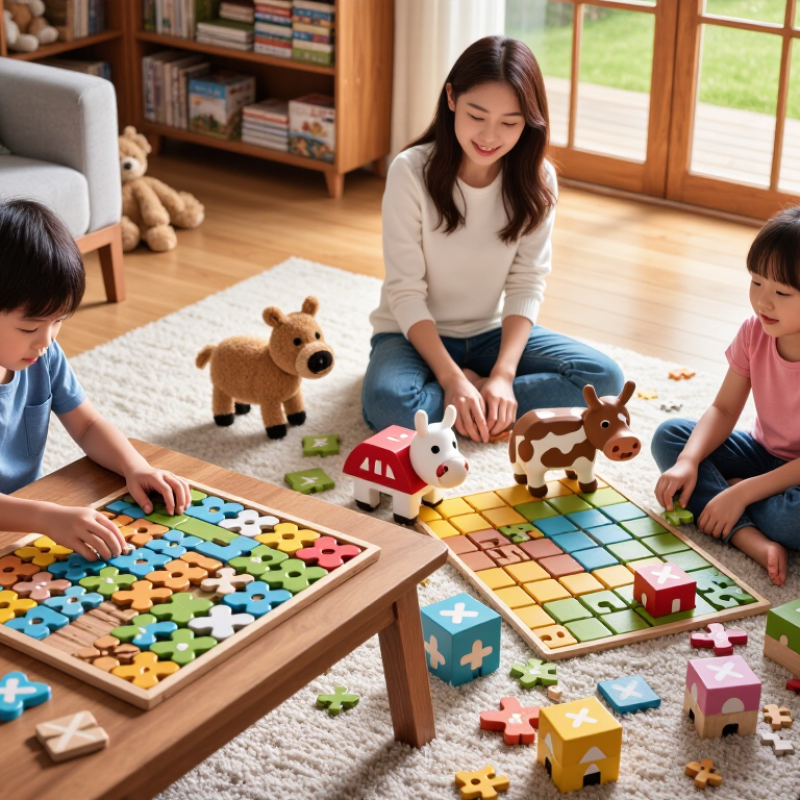
Piece counts are practical starting ranges commonly used to match puzzle difficulty with children’s developing attention, fine-motor control, and problem-solving skills. Begin at the lower end when introducing a new format, then increase complexity as the child becomes more confident. Consider familiar interests, learning goals, and whether the puzzle will be used independently or with an adult.
Comparing Durability, Difficulty, and Long-Term Value
Choosing a puzzle by age alone can mislead. Difficulty should match a child’s current skills, not only the number printed on the box. A 2023 Circana report recorded an 8% decline in U.S. toy sales, making wasteful purchases harder to justify. I look for thick pieces, clean cuts, and surfaces that resist peeling after repeated handling. A corner tested by a five-year-old often reveals more than a product photograph.
Durability protects long-term value. Wood or strong recycled board may cost more, but it can survive table drops, snack spills, and younger siblings. Check whether pieces bend, fade, or separate after light use. ASTM F963 safety requirements provide a useful baseline, although compliance does not guarantee enjoyable play. That distinction matters.
Difficulty should grow gradually. The American Academy of Pediatrics links play with problem-solving, persistence, and social development, but frustration can stop learning quickly. For younger children, choose large pieces and clear visual rewards. Older children may benefit from patterns, sorting challenges, or puzzles with several solutions. A 2024 Circana review also showed continuing consumer sensitivity to toy prices, so calculate value by play sessions, not the checkout total. I sometimes overestimate a child’s patience. That mistake is useful. Watch how they respond, then adjust the next puzzle accordingly.