
Blog
What Are Canadian Cigarette Types and Their Health Risks?
Canadian cigarettes can look similar on a shelf, yet their formats and labels may suggest meaningful differences. This introduction examines common cigarette types sold in Canada, including regular, menthol, slim, and “light” or low-yield products. These descriptions refer to product characteristics, not reliable measures of safety. A lighter taste or slimmer shape does not make smoking harmless.
Canadian tobacco-control researcher Dr. Robert Schwartz’s work offers a useful caution. In paraphrase: differences between tobacco products should not distract from the serious health risks of smoking. This is not a direct quotation. The distinction matters when people search for “most popular top 10 canadian cigarettes” lists. Popularity rankings describe consumer interest; they do not establish health risks, product quality, or safety. Tobacco smoke contains harmful chemicals, and smoking is linked to cancer, heart disease, stroke, and lung disease. Secondhand smoke also carries health risks.
A label can be persuasive. It is not a health guarantee. This guide will explain how cigarette types are commonly described, what those terms do—and do not—mean, and why the risks remain significant across products. It will also distinguish established health evidence from marketing language and ranking claims. Some details can be easy to overlook: people may interpret “mild” as safer, even when the wording says little about their actual exposure. That gap deserves a closer look. No list can remove the uncertainty or the harm.
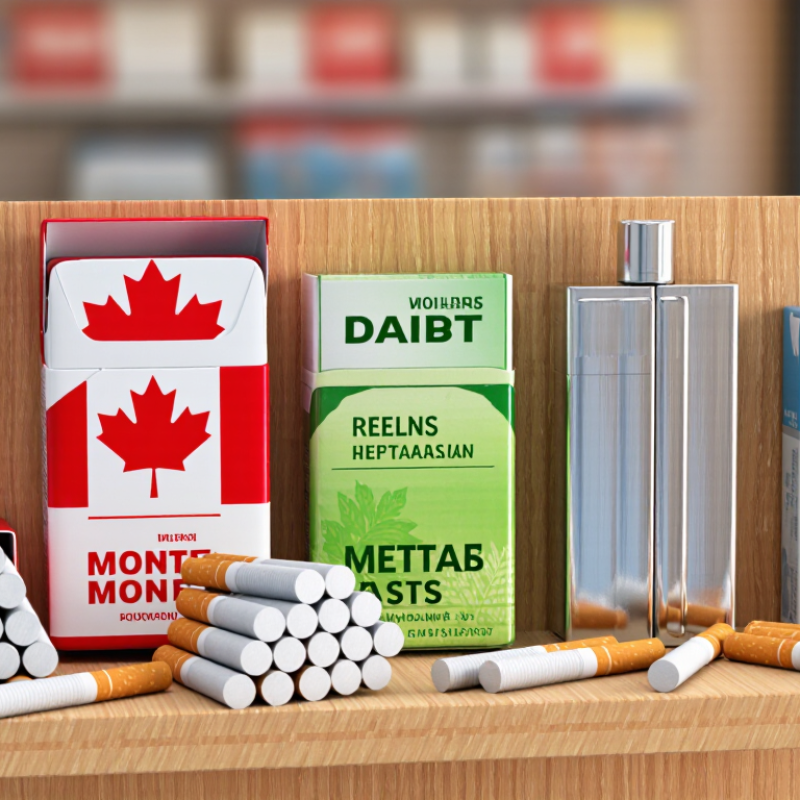
Types of Cigarettes and Tobacco Products Available in Canada
Canadian tobacco products come in several forms. Manufactured cigarettes contain processed tobacco wrapped in paper. Roll-your-own products let users fill papers by hand, but the smoke still carries harmful chemicals. Cigars and cigarillos burn tobacco wrapped in leaf or tobacco-based material; some are smoked slowly, while others are inhaled. Pipe tobacco and waterpipe tobacco are also used in Canada. The format changes, not the basic risk.
There are smokeless products too, including chewing tobacco and oral tobacco products. They avoid smoke, but can expose the mouth to nicotine and cancer-causing substances. Nicotine pouches are different: they generally contain nicotine without tobacco leaf, so they should not be confused with tobacco products. Product availability and rules can vary across provinces and territories. Check current Canadian public-health guidance for details.
The smoke matters. Burning tobacco creates fine particles and toxic gases that can damage the lungs and blood vessels. Cigarette smoking raises the risk of cancer, heart disease, stroke, and chronic lung disease. Cigars and waterpipes are not safer substitutes; waterpipe sessions can involve prolonged smoke exposure, even when the smoke passes through water. Second-hand smoke can also affect people nearby, including children. Labels and product names may suggest meaningful differences, but they cannot make tobacco safe. It is easy to underestimate exposure when use is occasional.
What Are Canadian Cigarette Types and Their Health Risks? — Types of Cigarettes and Tobacco Products Available in Canada
| Product type | What it is and how it is used | Key health risks | Important context |
|---|---|---|---|
| Manufactured cigarettes | Factory-made tobacco wrapped in paper and burned for inhalation. | Smoking causes cancer, heart disease, stroke, chronic lung disease, and other serious conditions. Second-hand smoke also harms people nearby. | Filters, “light” descriptions, or other design features do not make smoking safe. |
| Roll-your-own cigarettes | Loose tobacco rolled by the user in cigarette paper, with or without a filter. | Combustion produces harmful and cancer-causing chemicals; use carries risks similar to other forms of smoking. | Hand-rolling does not eliminate the health risks of tobacco smoke. |
| Cigars and cigarillos | Tobacco wrapped in tobacco leaf or tobacco-containing material; cigarillos are generally smaller. They may be smoked with or without inhaling. | Smoke exposes users to toxic and cancer-causing substances. Use can cause cancers of the mouth and throat, lung disease, and cardiovascular disease. | Not inhaling does not remove risks to the mouth and throat or exposure to second-hand smoke. |
| Pipe tobacco | Loose tobacco burned in a pipe and smoked through its stem. | Pipe smoking is associated with cancers of the mouth, throat, and lung, as well as heart and lung disease. | Smoke from a pipe can expose both users and bystanders to harmful substances. |
| Waterpipe tobacco (shisha) | Flavoured or unflavoured tobacco heated in a waterpipe and inhaled through a hose. The tobacco is often heated with charcoal. | Smoke contains nicotine and harmful substances; charcoal can add carbon monoxide and other toxic emissions. Use is linked to respiratory and cardiovascular harm. | Water does not filter out all harmful chemicals, and a session can involve prolonged smoke exposure. |
| Smokeless tobacco | Products such as chewing tobacco and oral snuff are used in the mouth rather than burned. | Can cause nicotine dependence and cancers of the mouth, throat, or pancreas; oral use can also damage gums and teeth. | Not producing smoke does not mean a product is harmless. |
| Heated tobacco products | Devices heat processed tobacco to produce an inhalable aerosol without burning it in the same way as a conventional cigarette. | Aerosol can contain nicotine and harmful chemicals. Long-term health effects are not yet fully known; these products are not risk-free. | Reduced levels of some emissions do not establish that use is safe or that health risks are eliminated. |
| Vaping products (not tobacco products) | Electronic devices heat a liquid to create an aerosol. Some liquids contain nicotine; they do not contain tobacco leaf. | Nicotine can cause dependence. Aerosols may contain substances harmful to the lungs, and the long-term effects are still being studied. | Vaping is included for comparison, but it is a distinct product category and is not harmless. |
Health note: No smoked tobacco product is safe. Health risks vary with the product and pattern of use, but switching product types does not remove tobacco-related risk. This table is general information, not individual medical advice.