
Blog

China Best Hiking Boots Suppliers for Global Buyers?

China Best Hiking Boots Suppliers for Global Buyers? This question deserves more than a factory list. Global buyers need dependable materials, stable production, and evidence that matches commercial promises.

The Outdoor Industry Association’s 2024 Outdoor Participation Trends Report recorded 57.8 million hiking participants in the United States during 2023. That demand raises expectations for comfort, grip, durability, and weather protection. Meanwhile, the World Footwear Yearbook 2024 reported that Asia produced about 87% of global footwear in 2023. China therefore remains an important sourcing base, but production scale alone does not prove supplier quality.

Details matter. A credible Hiking Boots supplier should explain its outsole compound, waterproof membrane, upper material, and factory quality controls. Buyers should request recent test records, production samples, audit evidence, and clear defect standards. A sample pair should be inspected after repeated flexing, wet-surface walking, and load-bearing use. Marketing photographs cannot replace physical verification.

Supplier selection also requires practical experience. Lead times may change during peak seasons. Material substitutions can occur without careful approval procedures. Even strong factories may provide inconsistent results across different models. That is an uncomfortable reality.

Data helps, but it is not perfect. Industry reports often combine hiking, trekking, and outdoor footwear categories. Their definitions may differ between markets. Responsible buyers should compare report findings with factory audits, customer references, and their own testing.

This guide evaluates China’s leading Hiking Boots suppliers through manufacturing capability, customization, certifications, communication, minimum order quantities, and export experience. The goal is not to identify the cheapest option. It is to find a supplier capable of producing reliable boots for real trails, real weather, and demanding global customers.
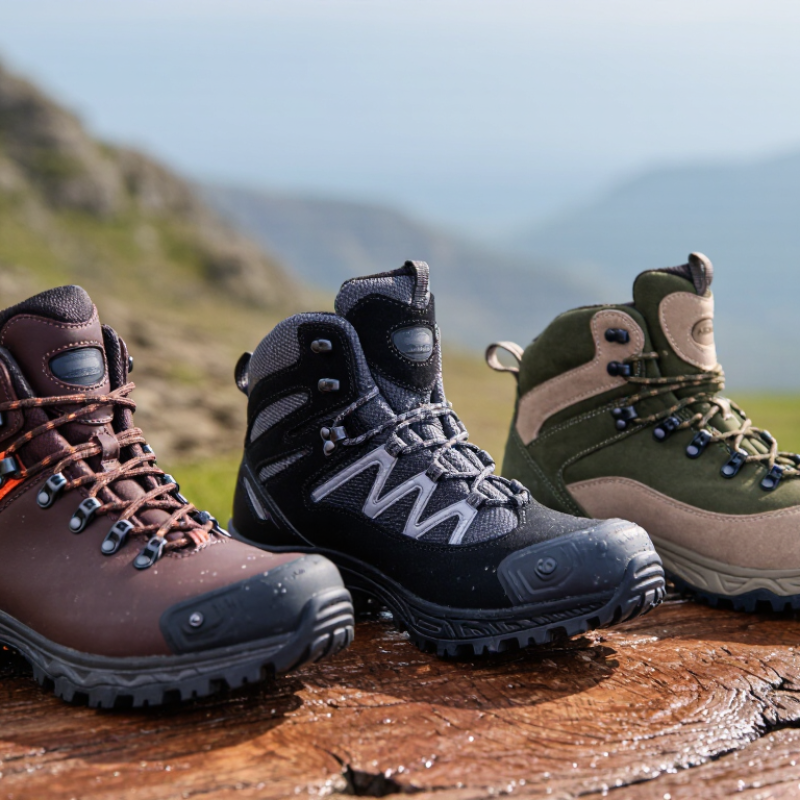
China Best Hiking Boots Suppliers for Global Buyers?

China’s Hiking Boot Manufacturing Landscape

China’s hiking boot manufacturing landscape is broad, flexible, and highly specialized. Production clusters often serve different needs, from lightweight trail shoes to rugged mountaineering boots. A capable factory may handle cutting, stitching, molding, bonding, and final inspection in one location. This reduces transport between workshops and improves production control.

Materials reveal a supplier’s real expertise. Inspect the leather or synthetic upper under strong light. Check whether the seams remain even around the toe box. Press the midsole and examine its recovery. A reliable manufacturer should explain rubber compounds, waterproof membranes, outsole patterns, and temperature performance clearly. Vague answers deserve caution. Good suppliers also provide sample records, inspection photos, and documented testing procedures. Small details matter.

Many factories can produce an attractive sample. Fewer can repeat it across thousands of pairs. Buyers should compare pre-production samples with finished cartons, including weight, sizing, color, and adhesive quality. Independent inspections can identify loose stitching, uneven bonding, or weak eyelets before shipment. Communication is another practical test. Delayed replies may indicate pressure on production or limited export experience. Still, even experienced suppliers make mistakes. A revised mold or material change can affect the final boot. Written specifications and regular checks reduce that risk, but they do not remove it.

Key Criteria for Choosing a Reliable Chinese Supplier

China remains a major production base for global hiking footwear. The World Footwear 2024 Yearbook estimated that China produced 54.6% of the world’s footwear in 2023. China Customs also reported footwear exports exceeding 9 billion pairs that year. Scale helps, but it does not guarantee dependable quality.

A reliable supplier should provide a verifiable factory address, legal registration, and recent audit records. Ask for production photos, not only polished showroom images. Confirm whether the factory makes hiking boots in-house or outsources critical work. Outsole bonding, waterproof membranes, and seam sealing need special attention. Request material certificates and test reports from laboratories accredited to ISO/IEC 17025. Reports should match the actual product and production batch.

Sample approval must include wear testing, flex testing, slip resistance, and water penetration checks. Use written specifications for leather thickness, sole hardness, adhesive strength, and packaging. An agreed AQL inspection level can reduce inconsistent shipments. Capacity claims should be checked against machinery, workers, and previous export records. Payment terms, lead times, inspection rights, and dispute procedures also require clear wording.

A low quotation may hide weaker foam, rushed curing, or unstable subcontracting. That part is easy to underestimate.

Supplier evaluation is rarely perfect, so review rejected samples and revise specifications before placing a large order. (World Footwear 2024 Yearbook; China Customs trade statistics)

Leading Supplier Types and Product Specialties

China Best Hiking Boots Suppliers for Global Buyers?

Global buyers usually meet three supplier types in China. OEM and ODM factories develop hiking boots from technical drawings or shared specifications. They suit private-label projects needing custom soles, colors, linings, and packaging. Trading companies offer broader catalogs and smaller minimum orders. However, factory visibility may be limited. Ask for current production photos, material records, and factory audit details. Small specialist workshops focus on narrow product categories, such as leather trekking boots or lightweight trail footwear. Their craftsmanship can be strong, but capacity may fluctuate during busy seasons.

Product specialty should match the intended terrain. Waterproof hiking boots need sealed seams, reliable membranes, and tested moisture resistance. Rocky routes demand firm midsoles, protective toe caps, and deep rubber lugs. Cold-weather models require insulation, flexible uppers, and space for thicker socks. Lightweight trail shoes should balance low weight with heel stability. Fit deserves equal attention. Request size samples, foot-length charts, and wide-fit options before ordering.

Reliable sourcing requires evidence, not attractive promises. A pre-production sample should match the approved materials, stitching density, outsole pattern, and logo placement. Independent testing can examine slip resistance, flex durability, bonding strength, and water penetration. Suppliers should also explain quality-control checkpoints and acceptable defect rates. Communication matters during revisions. Some factories promise everything too quickly. That gap needs honest discussion. Buyers should record changes in a clear specification sheet, because small details often disappear between sampling and mass production.

Quality Control, Certifications, and Production Standards

China Best Hiking Boots Suppliers for Global Buyers?

China remains a major footwear production base. The World Footwear Yearbook 2024 estimated 23.9 billion pairs were produced globally in 2023. Asia supplied about 88% of that volume. Scale helps, but it does not guarantee dependable hiking boots. Global buyers should inspect production controls, not only factory photos.

A reliable supplier should maintain ISO 9001 quality procedures, including incoming material checks, in-line inspections, and final sampling. Ask for test records covering outsole abrasion, flexing, slip resistance, waterproofing, and upper-to-sole bonding. For chemical safety, request current REACH-related laboratory reports where applicable. Certifications need verification. A certificate is not proof of every pair. Production batches can still vary.

Tips: Request a lot-specific inspection report. Check the factory’s calibration records. Compare random pairs from different cartons. Examine stitching around eyelets, heel counters, and toe caps. Ask how failed samples are corrected and recorded. Independent testing is safer than relying on supplier paperwork alone. The SATRA Technology Centre highlights the importance of repeatable footwear testing, yet even strong standards cannot replace physical inspection. One weakness remains common: buyers often approve a perfect sample, then monitor production too late.

Sourcing, Pricing, Shipping, and Buyer Protection

China Best Hiking Boots Suppliers for Global Buyers?

China remains a major sourcing base for hiking boots. The World Footwear Yearbook 2024 reports that Asia produced about 87% of global footwear in 2023. This concentration supports competitive pricing, flexible materials, and scalable production.

Buyers should compare full landed cost, not factory price alone. Request FOB, CIF, and delivery estimates in separate lines. Add tooling, inspection, insurance, customs, and port charges. UNCTAD reports that maritime transport carries over 80% of global merchandise trade by volume. Shipping delays can therefore affect seasonal launches. Check sailing schedules and monitor freight benchmarks before confirming orders.

Protect the transaction with detailed specifications. Include outsole compound, waterproofing test results, size tolerance, carton markings, and defect limits. A pre-shipment inspection is useful, but it cannot replace sample approval. Ask for production photos and independent test reports. Use staged payments linked to measurable milestones. Buyer protection needs evidence.

Tips: Compare at least three suppliers. Audit factory capacity. Confirm production lead time in writing. Do not trust unusually low quotations. I have seen attractive offers become expensive after rework and storage charges. That warning is easy to ignore. Review Incoterms carefully, because they define logistics responsibilities but do not guarantee product quality or payment recovery. Keep every promise in the purchase contract.