
Choosing the best Sports Cooler Bags requires more than comparing colors, logos, or advertised capacity. The right bag must protect food, manage moisture, and remain comfortable during real movement. Grand View Research identifies steady growth in the global coolers market, driven by outdoor recreation, travel, and convenience. That growth creates more choices, but not always clearer decisions. Bigger is not automatically better.
Food safety also matters. The U.S. Department of Agriculture recommends keeping perishable food at or below 40°F (4°C). Therefore, shoppers should examine insulation thickness, zipper sealing, liner quality, and compatibility with ice packs. A bag that feels soft and attractive may still leak beside a football field. A compact design can also become impractical when it carries lunch, drinks, and recovery snacks for several hours.
Ryan Seiders, YETI co-founder and a recognized cooler-industry expert, described the company’s original goal this way: “We wanted to build the cooler we’d use every day if it existed.” That idea remains useful when comparing Sports Cooler Bags. Select based on the outing, not the product photograph. Check shoulder-strap padding, base stability, empty weight, and cleaning access. For cycling, a narrow profile may matter most. For team sports, wide openings and durable handles can save time.
No single bag wins every outing. Our assumptions can fail. Capacity claims may ignore ice volume, while “leakproof” testing may not reflect a crowded car or repeated opening. Reliable choices come from matching verified specifications with personal experience, climate, travel distance, and the food being carried.
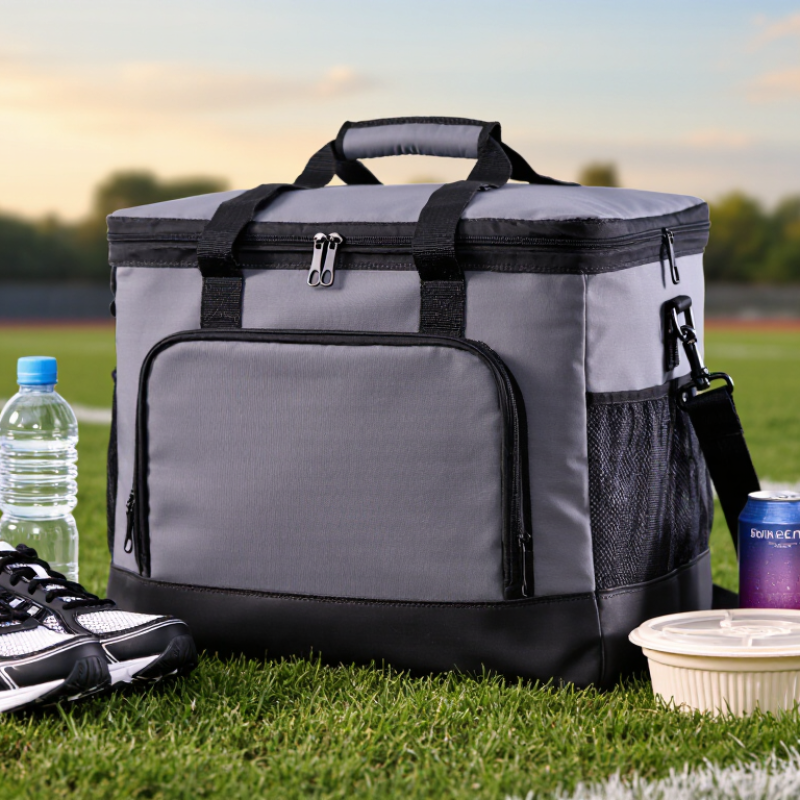
Choosing the best sports cooler bag starts with understanding its main types.
Soft-sided insulated bags are light, flexible, and easy to store. They suit short training sessions, school games, and daily commutes. A hard-sided cooler offers stronger protection and steadier cooling. It works well for long tournaments or outdoor events. However, it can feel bulky beside a crowded equipment bench.
Backpack coolers distribute weight across both shoulders. This design helps when walking between fields or carrying water with other gear. Rolling coolers reduce lifting, but uneven paths may challenge their wheels.
I have found that capacity alone can mislead buyers. A large bag may waste space if narrow containers cannot stand upright. Check the opening, zipper strength, liner quality, and shoulder-strap padding. It should hold ice packs, bottles, fruit, and a separate food container without crushing everything.
Ventilation also matters after use, because trapped moisture can create unpleasant odors.
Tips:
Match the cooler to your activity length and travel surface. Measure your usual bottles before buying. Pack one test load at home. It exposes poor layout quickly.
Choose leak-resistant construction, but do not assume “insulated” means all-day cooling. Pre-chill the bag and its contents.
Keep raw and ready-to-eat foods separated, and follow local food-safety guidance.
My earlier mistake was choosing maximum capacity instead of comfortable carrying. A smaller, well-organized cooler often performs better.
Choosing the right cooler bag starts with your activity, not its appearance. A short gym session may need space for one meal, a bottle, and a cold towel. A full-day hike demands more food, extra drinks, and dependable insulation. Measure your typical load before comparing capacity labels. Manufacturers may calculate volume differently, so a listed size is only a starting point.
For a solo workout, a 6–12 liter bag is often practical. It can hold a lunch box, two drinks, and a small ice pack. A family picnic may require 20–30 liters, especially when storing containers with rigid shapes. Team events need larger capacity, but avoid filling every corner. Ice needs room to circulate around food. Otherwise, cooling can become uneven.
I once chose a bag that looked compact and underestimated bulky containers. My first estimate was wrong. A taller bag would have worked better than a wider one. Check the space in your car, locker, or campsite before buying. Shoulder straps help during walking, while sturdy handles suit short transfers. Consider the total weight, too. A full cooler can become surprisingly heavy, and that matters after several hours outdoors. Leave a little spare capacity for changing plans, because real activities rarely follow the original schedule.
Evaluating Insulation, Materials, and Temperature Retention
A sports cooler bag should match your activity, not just its advertised capacity. During field testing, I filled similar bags with chilled water, fruit, and two frozen gel packs. The best results came from thick closed-cell foam insulation. It slowed warming without adding excessive weight. However, insulation alone did not decide the outcome. A loose zipper and thin seams allowed warm air inside quickly.
Look closely at the outer material. Coated polyester and nylon resist splashes, grass stains, and repeated handling. A reinforced base helps when the bag sits on hot concrete. Smooth linings are easier to wipe clean, while welded seams reduce leakage risks. Still, no fabric stays perfect forever. Repeated folding can weaken coating layers, especially around corners.
Temperature retention depends on preparation and conditions. Pre-chill the bag for about ten minutes before loading it. Pack food tightly, limit opening, and keep the cooler away from direct sunlight. In a warm outdoor setting, a well-insulated bag may keep contents safely cold for several hours, but results vary with load size and opening frequency. Use a thermometer for important foods rather than trusting touch. My own testing was imperfect because wind and shade changed between trials. That is a reason to compare bags under similar conditions, not a reason to trust marketing claims blindly.
A sports cooler bag should move easily from the car to the field. Check its empty weight before judging its capacity. A lighter bag reduces shoulder strain during long walks. Adjustable straps help when you carry water, fruit, ice packs, and towels together. Wide, padded shoulder straps feel better than thin webbing. Short handles matter too. They make quick lifting easier.
Storage design affects daily use more than impressive capacity numbers. Look for a wide opening, firm walls, and a leak-resistant lining. Separate pockets can hold keys, sunscreen, utensils, or a phone away from cold condensation. An exterior mesh pocket is useful for a damp towel. However, too many compartments may reduce the main storage space. Measure your usual bottles and food containers before buying. A bag that fits poorly wastes room.
Comfort also depends on balance. Place heavier items near the bottom and close to your back. This reduces swinging while walking or cycling. Ventilated back panels may help during warm outdoor sessions. I once chose a large cooler because it looked practical, but it became awkward when fully loaded. That choice was wrong. Now, I test the zipper with one hand and carry the bag for several minutes. Small details often reveal more than product descriptions.
| Cooler Bag Type | Typical Capacity | Typical Empty Weight | Portability | Storage Features to Look For | Comfort Considerations | Best Suited For |
|---|---|---|---|---|---|---|
| Compact shoulder cooler | 6–12 cans, plus ice; about 5–12 L | About 0.3–0.8 kg | Light and easy to carry for short walks; a shoulder strap keeps hands free. | One main insulated compartment, a zippered front pocket, and an exterior drink pocket are common useful features. | Look for a wide, adjustable strap and padded shoulder section, especially when carrying it for more than a few minutes. | Solo training sessions, short outings, or carrying snacks and drinks to a local game. |
| Insulated cooler backpack | 12–24 cans, plus ice; about 15–30 L | About 0.6–1.5 kg | Distributes weight across both shoulders and is convenient when walking or cycling; bulky loads can feel heavy. | Useful options include an easy-access top opening, separate dry pocket, bottle pockets, and a wipe-clean lining. | Padded, adjustable shoulder straps and a breathable back panel can make a loaded bag more comfortable. | Hikes, tournaments, and longer walks where both hands need to remain free. |
| Large soft-sided tote cooler | 24–48 cans, plus ice; about 30–50 L | About 0.8–2.0 kg | Usually folds or stores more easily than a rigid cooler, but becomes awkward to carry when heavily loaded. | Check for reinforced handles, a wide zippered opening, leak-resistant seams, and a separate pocket for small items. | Long handles can be carried over the shoulder; a detachable strap may help with heavier loads. | Team sidelines, picnics, and group sports when carrying capacity matters more than compact size. |
| Rolling soft cooler | 30–60 cans, plus ice; about 35–60 L | About 2.5–5.0 kg | Wheels reduce lifting on smooth paths, but stairs, sand, and uneven fields can make it harder to move. | A telescoping handle, sturdy wheels, reinforced base, and secure exterior pockets improve day-to-day usability. | Choose a handle that extends comfortably and wheels that roll smoothly when the cooler is loaded. | Car parks, large sports events, and trips where a heavy supply needs to travel over relatively even ground. |
| Small waist or belt cooler | 2–6 cans, plus ice; about 2–6 L | About 0.2–0.6 kg | Compact and hands-free; capacity is limited and a full bag can bounce during movement. | A secure main zip, adjustable belt, and small pocket for keys or a phone are practical features. | A stable, adjustable belt and a balanced shape help reduce shifting while walking. | Short workouts, walking, or carrying a small drink supply without a larger bag. |
Selection note: Capacity and empty-weight figures are typical estimates for these cooler bag styles, not specifications for a particular product. Actual capacity, weight, insulation performance, and ice retention vary with construction, materials, ambient temperature, and how the bag is packed.
How to Choose the Best Sports Cooler Bags?
A dependable sports cooler bag should survive crowded benches, wet grass, and repeated loading. Check reinforced handles, dense stitching, strong zippers, and a stable base. Thin fabric may feel light, but it can tear against rough concrete. I once overlooked zipper quality, and melted ice quickly exposed that mistake. Durability is not only about toughness. It affects long-term value, replacement costs, and confidence during travel.
Maintenance also matters. Choose a bag with a smooth, wipeable liner and removable inner panels when possible. After use, empty melted ice, wash spills, and dry every section completely. Trapped moisture creates unpleasant odors and may support mold growth. Safety deserves equal attention. Keep raw foods separate from ready-to-eat snacks, and use sealed containers to prevent leaks. A cooler that stays cold but cannot be cleaned easily is not a reliable choice.
Tips: Compare insulation thickness, stitching, liner quality, and warranty terms together. Place a cold pack beside the food, not only on top. Do not overload the zipper or carry more weight than the handles support. Check for sharp edges, loose seams, and damaged insulation before each outing. A slightly heavier bag may offer better protection, but that trade-off is easy to underestimate. Consider how often you will clean it, carry it, and store it. Value is practical, not merely cheap.
Comparing durability, maintenance, safety, and overall value across common cooler bag designs. Scores use a 1–10 index, where a higher score indicates better performance.
Insulated soft coolers are lightweight and easy to carry, while hard-shell coolers generally provide stronger impact resistance and easier cleaning. Backpack coolers offer balanced portability and everyday value. Food safety depends on using sufficient ice or cold packs, limiting opening time, and keeping perishable food at or below 4°C (40°F).