Blog

How to Source Soft Dolls Wholesale in 2026?

Sourcing Soft Dolls wholesale in 2026 requires more than comparing prices on a supplier platform. Buyers need dependable products, transparent factories, and evidence that each shipment meets applicable safety requirements. A soft doll may look charming in a product photo, yet loose stitching, uneven stuffing, or a strong chemical smell can appear during inspection. These details affect customer trust and return rates.

A practical sourcing process starts with a clear product brief. Define the doll’s size, fabric, filling, colors, packaging, age grading, and expected order volume. Request physical samples before approving production. Check seam strength, embroidery quality, fabric softness, wash performance, and packaging durability. Ask suppliers for current test reports and material information from recognized laboratories. Factory experience matters, but recent performance matters more. Review production photos, sample history, communication speed, and quality-control procedures.

Pricing deserves careful attention. A low quote may exclude packaging, inspection, tooling, freight, or replacement terms. Compare complete landed costs instead of unit prices alone. Confirm minimum order quantities, payment stages, lead times, and approved sample standards in writing. No process is perfect. A polished factory presentation can still hide weak quality control. I have found that small pilot orders reveal more than confident promises. Keep written records, inspect before shipment, and leave room for delays during peak seasons. With patient research and measurable standards, buyers can build a Soft Dolls supply chain that supports consistent quality, responsible purchasing, and long-term customer confidence.

How to Source Soft Dolls Wholesale in 2026?

Define Your Soft Doll Wholesale Requirements

Define Your Soft Doll Wholesale Requirements

Sourcing begins with a precise product brief, not a supplier list. Define the doll’s age range, height, fabric, filling, facial details, packaging, and target price. Start with a specification sheet. Include acceptable color variation and stitching tolerance. A 35-centimeter doll may look simple, yet its hair, clothing, and embroidered features can change costs quickly.

Market data supports careful planning. Fortune Business Insights valued the global plush toys market at approximately USD 7.28 billion in 2023 and projects continued growth through 2032. Grand View Research also reports expanding demand for stuffed and plush products, supported by online retail and gift purchases. These figures show opportunity, but they do not guarantee fast sales for every design. Your requirements must match a specific customer group, sales channel, and seasonal plan.

Set the minimum order quantity, sample quantity, production schedule, inspection standard, and replacement policy before negotiation. Ask for material specifications and relevant safety test documentation. Confirm whether the quoted price includes packaging, labels, cartons, and delivery terms. Samples can mislead. I have seen attractive prototypes hide loose seams or inconsistent stuffing. Therefore, inspect several units, not one perfect sample. Record weight, measurements, stitching, odor, and color under normal store lighting. Leave a small cost buffer for revisions. That may feel inefficient, but soft dolls often reveal defects only during larger production.

How to Source Soft Dolls Wholesale in 2026? - Define Your Soft Doll Wholesale Requirements
Requirement Category Key Specification to Define Recommended Planning Target Verification Method Wholesale Sourcing Note
Product Type Plush doll, rag doll, character doll, animal doll, or educational soft doll Select 1 primary construction type and 1–2 size variations Review product drawings, reference samples, and construction details A clearly defined product type reduces quotation differences between suppliers.
Finished Size Overall height, width, sitting height, and allowed tolerance Common retail sizes: 20–35 cm; tolerance: ±5 mm Measure a pre-production sample with a calibrated ruler or measuring tape Specify whether the measurement includes ears, hats, tails, or other accessories.
Outer Fabric Fiber content, pile length, color, softness, and surface appearance Polyester plush or cotton-blend fabric; color variation controlled by approved sample Check fabric composition, color swatch, pile direction, and surface defects Longer pile fabrics generally require stricter cutting and brushing controls.
Filling Material Filling type, density, recovery, cleanliness, and distribution Clean polyester fiber filling with even firmness and no hard lumps Perform visual inspection, compression recovery check, and weight comparison Define firmness separately for the head, body, limbs, and decorative parts.
Construction Seam strength, stitch density, attachment method, and shape retention Uniform seams with no open stitching, loose threads, or visible distortion Inspect seams inside and outside; conduct pull testing on attached components High-stress areas such as necks, arms, legs, and ears need additional attention.
Safety Classification Intended age group and whether the item is a toy or a decorative product Define age marking before quotation; avoid ambiguous “all ages” positioning Review product design, warnings, small parts, cords, magnets, and detachable components Age classification affects testing scope, labeling, packaging, and market eligibility.
Eyes and Decorative Parts Embroidered features, plastic eyes, buttons, ribbons, beads, magnets, or other attachments Use embroidered features for lower-detachment-risk designs where suitable Check attachment security and perform applicable small-component testing Every detachable part should be listed in the technical specification and test plan.
Color Requirements Color reference, number of colors, print method, and colorfastness Approve a physical color standard before mass production Compare against the approved sample under consistent lighting; check rubbing and wash performance when relevant Digital screen colors are not sufficient as the only production reference.
Customization Level Stock design, modified design, private-label packaging, or fully custom development Prepare artwork, dimensions, materials, logo placement, and packaging files in advance Approve a digital proof and physical sample before production Full customization usually requires more sampling time and a higher minimum order.
Minimum Order Quantity Minimum units per design, color, size, and packaging configuration Plan a trial order of approximately 300–1,000 units per design, subject to supplier capability Request written confirmation of MOQ by SKU and by color Combining sizes or colors may not reduce MOQ if separate materials or production setups are required.
Unit Cost Structure Product price, sample fee, tooling fee, packaging cost, testing cost, and shipping terms Request a line-item quotation with currency, Incoterm, validity period, and payment terms Compare at least three equivalent quotations using the same specification A lower unit price may exclude packaging, testing, inspection, or freight charges.
Sampling Prototype, revised sample, pre-production sample, and approval procedure Allow 1–3 sample rounds for a new custom design Use a signed or documented sample approval checklist The approved pre-production sample should become the primary quality reference.
Production Lead Time Time from deposit and final approval to finished goods Typical planning range: 30–60 calendar days after approval for standard-volume orders Obtain a production schedule with material, sewing, finishing, inspection, and packing milestones Custom fabric, seasonal demand, testing, and complex packaging can extend the schedule.
Packaging Individual bag, paper card, gift box, carton dimensions, and packing quantity Define package dimensions and carton gross-weight limit before shipping quotation Approve a packaging mock-up and verify carton count, weight, and dimensions Packaging volume can significantly affect freight cost even when product weight is low.
Labeling Age warning, material information, care instructions, country of origin, barcode, and batch code Prepare market-specific artwork before final sample approval Check text, symbols, language, placement, durability, and barcode readability Labeling requirements vary by destination market and product classification.
Regulatory Compliance Applicable toy, chemical, flammability, labeling, and consumer-product requirements Confirm destination-market requirements before production, not after shipment Use an accredited laboratory or qualified compliance assessor where required Testing requirements depend on the destination, intended age, materials, and product design.
Restricted Substances Dyes, coatings, plastic components, adhesives, heavy metals, phthalates, and other regulated substances Use documented material declarations and test reports appropriate to the destination market Review supplier declarations and conduct risk-based laboratory testing A previous report may not cover a new fabric, color, component, or production facility.
Quality Standard Acceptable quality limits for critical, major, and minor defects Set a written inspection standard before mass production; use an agreed sampling plan Conduct pre-production, in-process, and pre-shipment inspections Define critical defects as unacceptable and document measurable limits for other defects.
Order Quantity Forecast Initial purchase quantity, monthly demand, seasonal peaks, and reorder frequency Prepare a 6–12 month forecast with a safety-stock assumption Compare forecast demand with MOQ, production capacity, shelf life, and storage space A realistic forecast improves negotiation on price, capacity reservation, and replenishment time.
Logistics Shipping method, destination, carton data, delivery deadline, and import responsibilities Calculate landed cost using confirmed carton dimensions and gross weight Request freight quotations based on the final packing specification Choose the shipping method according to delivery urgency, order value, and inventory plan.
Supplier Evaluation Relevant experience, sample quality, communication, production capacity, and documentation Shortlist suppliers that can provide samples, specifications, and compliance evidence Use a weighted scorecard covering quality, cost, lead time, capacity, and risk Evaluate the production site and subcontracting arrangements when order risk is significant.

Research and Compare Wholesale Suppliers

How to Source Soft Dolls Wholesale in 2026?

Research and Compare Wholesale Suppliers

The global toys market remains competitive. Grand View Research valued it at about USD 108.7 billion in 2023. It also projects a 4.7% compound annual growth rate from 2024 to 2030. These figures support demand, but they do not guarantee profitable soft doll sourcing.

Compare at least three qualified suppliers using one scorecard. Record unit price, minimum order quantity, sample fees, production time, packaging, and shipping terms. Ask for recent material specifications and independent safety test reports. For products sold in different markets, verify applicable requirements such as EN 71 or ASTM F963. The U.S. Consumer Product Safety Commission states that children’s products require third-party testing and certification. Documentation matters.

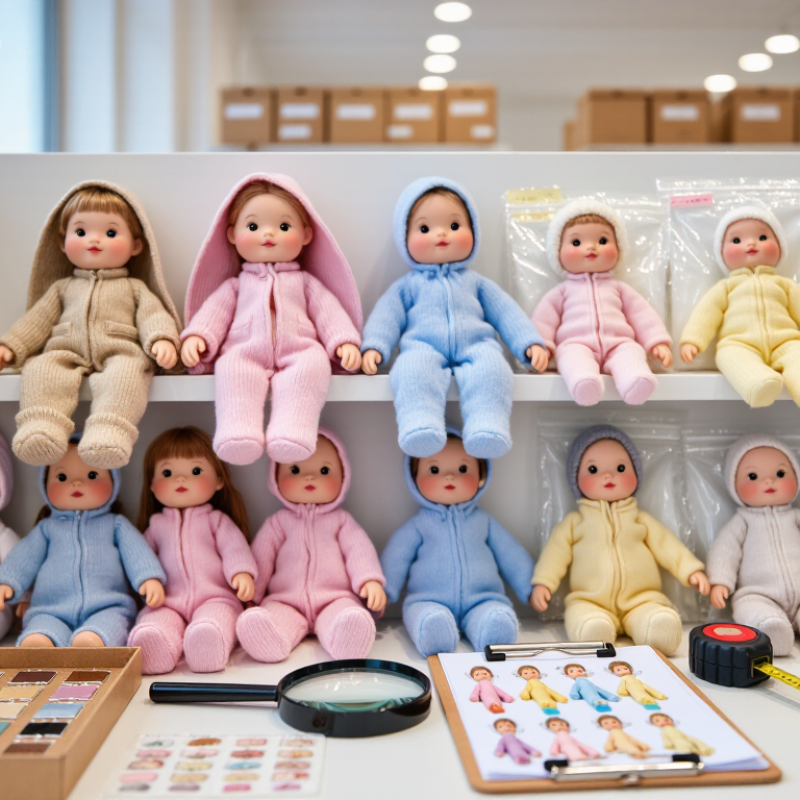
Look closely at the sample. Check stitching around the arms, filling density, embroidered details, odor, and washable labels. Photograph the doll beside a ruler. Ask whether the sample uses production materials. Some suppliers quietly substitute fabric. That happened in my first comparison, and I missed it.

A low quotation can hide weak quality control. Compare the landed cost, not only the factory price. The World Bank’s Logistics Performance Index highlights delivery reliability as a major supply-chain factor. Request inspection records, defect limits, and a replacement policy before ordering. Supplier communication also deserves a score. Slow replies may become expensive later.

Do not choose the cheapest offer too quickly. A small trial order can reveal more than a polished catalog.

Evaluate Materials, Safety, and Product Quality

How to Source Soft Dolls Wholesale in 2026?

Material selection should begin with a fiber declaration, not a soft touch. Ask suppliers whether the outer fabric is polyester, cotton, or a blend. Request proof of recycled-content claims when applicable. Check stuffing for odor, moisture, loose fibers, and uneven density. A doll may feel soft but still fail seam-strength testing. Review colorfastness after rubbing and washing. Small details matter.

Safety needs independent verification. The U.S. Consumer Product Safety Commission’s 2023 report estimated 231,700 toy-related emergency-room injuries among children under 15 in 2023. This figure shows why age grading, secure eyes, and tight seams deserve more than visual inspection. Request batch-level testing against applicable requirements, such as ASTM F963, EN 71, or ISO 8124. Test reports should match the exact material, factory, and production date. Old reports are not enough.

Tips: Order samples from two production batches. Cut open one sample and inspect the stuffing. Pull every accessory firmly. Keep photos, lab files, and corrective actions in one quality record. I once treated a pleasant fabric smell as a quality signal; that was weak judgment. Ask for measurable evidence instead. A lower defect rate matters more than a polished sample. Suppliers should explain failed tests clearly, not hide behind vague promises.

Review Pricing, Minimum Orders, and Shipping Terms

When sourcing soft dolls wholesale in 2026, review the full price instead of trusting the unit quote. A supplier may offer $3.20 per doll, but embroidery, individual packaging, and carton testing can add 15% or more. Request a detailed cost sheet in your preferred currency. Include fabric, filling, labels, sample fees, and inspection charges. My first quote review missed packaging costs. That mistake changed the real margin.

Minimum order quantities need careful negotiation. Some factories quote 500 pieces per design, while others require 1,000 pieces per color. Ask whether mixed colors count toward one order. A 600-piece trial may be safer than a 3,000-piece commitment, even when the unit price is higher. Confirm the deposit, balance schedule, production lead time, and remake policy before approving samples. Small details matter.

Shipping terms can alter profitability more than a discount. Under EXW, you may arrange pickup, export handling, and inland transport. FOB usually includes delivery to the agreed port, but ocean freight and destination charges remain separate. For door delivery, request a written breakdown of freight, duties, taxes, and clearance responsibilities. Calculate carton volume, not just product weight. For example, 20 cartons measuring 60 × 40 × 50 centimeters can consume substantial space. Keep a buffer for seasonal freight changes. Estimates are not guarantees.

How to Source Soft Dolls Wholesale in 2026?

Indicative 2026 wholesale benchmarks for unbranded soft dolls show that larger minimum orders generally reduce the FOB unit price. Typical factory MOQs range from 100 to 3,000 pieces, while production commonly takes about 20–45 days after sample approval and deposit. FOB pricing excludes international freight, insurance, import duties, and local delivery. For smaller orders, air shipping is faster but more expensive; sea shipping is usually more economical for larger volumes.

Indicative market benchmarks only; actual prices vary by size, fabric, filling, customization, packaging, testing requirements, destination, and shipping terms.

Place Samples and Build a Reliable Supply Plan

How to Source Soft Dolls Wholesale in 2026?

Place Samples and Build a Reliable Supply Plan

Request physical samples before discussing large wholesale quantities. Photos can hide uneven stitching, loose filling, or fabric that feels rough. Check each doll by hand. Measure its height, weight, seams, facial details, and packaging space.

Ask the supplier for a written specification sheet. It should list materials, dimensions, color references, packing methods, minimum order quantity, and production lead time. Request safety test reports that match your target market. Confirm whether reports cover fabric, filling, small parts, and labeling requirements. Keep sample approval records with dated photos.

Do not rely on one impressive sample. Order a second sample after revisions. This reveals whether the factory can repeat the same quality. Use a simple inspection plan, such as checking 50 units from every production batch. Define acceptable defects before placing the order. Minor thread ends may be repairable, but crooked eyes or damaged seams should not pass.

Build a supply calendar around realistic demand, not optimistic guesses. Add time for material purchasing, production, inspection, shipping, and customs clearance. A small safety stock can protect seasonal sales. However, excessive stock ties up cash. I once underestimated packaging volume, and storage costs grew quickly. That mistake changed my planning habits. Review supplier response speed, defect rates, payment terms, and replacement policies every quarter. Clear records make difficult decisions easier.

Article Source: