
Blog

What Is Thermal Paper and How to Choose the Right Type?

Thermal paper is designed to create an image when heat activates a coating on its surface. It does not need a ribbon or liquid ink. In a checkout printer, tiny heated elements darken selected areas as the paper moves across the printhead. The result is the familiar receipt, often warm and slightly curled as it leaves the machine. The question “what is thermal paper” matters because not every roll performs equally in every setting. Paper quality, coating, printer compatibility, and storage conditions all affect the printed result. A receipt kept near a sunny window may fade sooner than one stored in a cool drawer. Small details matter.

Choosing the right type starts with the printer’s specifications: roll width, core size, and supported paper grade. Direct thermal paper is common for receipts and short-term labels, while coated grades can offer better resistance to moisture, oils, or handling. The right choice depends on the job, not just the price per roll. A busy café may prioritize clear printing and dependable feeding; a shipping label may need to remain legible through more handling. Check the manufacturer’s guidance, especially when print durability matters. Also consider how long records must remain readable and where they will be stored. Not every application needs premium stock. Still, choosing the cheapest option can bring faint text, jams, or early fading. There is no perfect roll for every use. A sensible choice balances printer fit, expected exposure, and the life of the printed information. Sometimes, testing a sample roll is the most practical step.
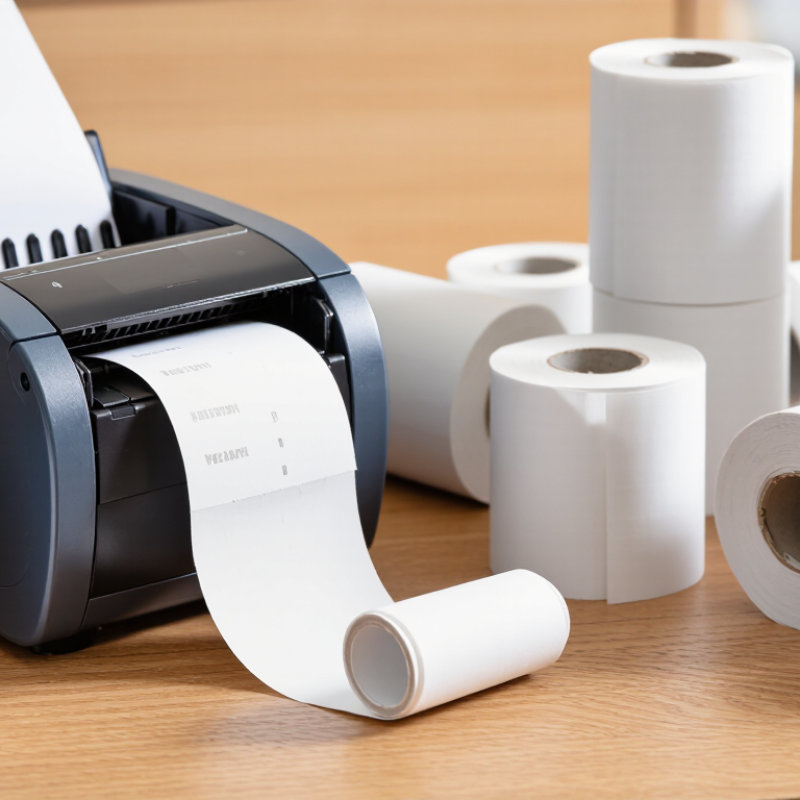
What Is Thermal Paper and How to Choose the Right Type?

What Thermal Paper Is and How It Produces Images

Thermal paper is paper coated with chemicals that react to heat. Its smooth surface contains a heat-sensitive layer, often made with a dye and a developer. When heated, these materials react and create a visible mark. No ink is needed.

Inside a direct thermal printer, a printhead presses tiny heated elements against the paper. As the sheet moves beneath it, selected elements warm specific spots. Those spots darken, forming letters, numbers, or simple images. The image is created dot by dot. A faint receipt can result if the printhead is dirty, worn, or poorly matched to the paper.

The final image depends on heat settings, coating quality, and paper storage. Too little heat may produce pale text; excessive heat can darken nearby areas. Light, friction, and warmth may also cause prints to fade or discolor over time. For everyday receipts, this may be acceptable. For long-term records, it deserves thought. Keep important prints cool, dry, and away from direct sunlight, though storage alone cannot guarantee permanence. Thermal paper is also not the same as thermal-transfer stock, which uses a separate ribbon to transfer an image.

The Main Types of Thermal Paper and Their Uses

Direct thermal paper darkens when its heat-sensitive coating passes under a printhead. Uncoated grades suit short-lived receipts and queue tickets. Top-coated grades resist moisture, oils, and handling better, making them useful for shipping labels and chilled-food tags. Grand View Research estimated the global thermal paper market at USD 4.3 billion in 2023, forecasting 5.2% annual growth from 2024 to 2030. That growth reflects broad use, but not every application needs a premium grade.

Thermal-transfer media use a heated ribbon to transfer ink onto the label. They are a practical choice for long-lasting barcodes, shelf labels, and asset tags that may face sunlight or abrasion. Unlike direct thermal stock, they require a ribbon and compatible printer. Small detail, big difference. Some suppliers also offer BPA- or BPS-free direct thermal grades; check the coating specification rather than relying on a generic “eco” label.

Tips: Match the paper to its real exposure. For a receipt kept in a warm car, test fading before ordering rolls in bulk. For cold storage, check whether the label stays readable after condensation. These checks take time, admittedly, and the perfect paper choice can still be a compromise between cost and durability.

How Printers and Applications Determine Paper Compatibility

Thermal paper is coated to darken when heated, but printer compatibility depends on more than the roll fitting the holder. Check whether the device uses direct-thermal printing or thermal transfer; the latter needs ribbon-compatible media. Match the roll width, core diameter, and maximum outside diameter to the printer manual. A roll that looks right can still rub against the guides or feed unevenly. Small details matter.

Printhead energy, speed, and paper sensitivity affect contrast and image durability. If the coating needs too much heat, faint text may persist; too much heat can darken the background.

Grand View Research’s thermal paper market report estimated global sales at about US$4.3 billion in 2023 and projected 6.3% annual growth through 2030. That market figure reflects varied applications, not universal printer compatibility.

For receipts exposed to sunlight, oils, or handling, compare top-coated and standard grades, then test a short roll under actual operating conditions. Check barcode clarity, cut quality, and whether the image remains readable after storage.

Easy to miss. Even experienced buyers can overlook the printer’s specified paper thickness. A small test is worthwhile.

Key Factors for Choosing the Right Thermal Paper

Choosing thermal paper starts with the printer, not the price tag. Check the required roll width, core diameter, and maximum roll diameter against the printer manual. Then confirm that the paper’s heat-sensitive coating faces the print head. A quick test print can catch pale text, smudging, or uneven darkness. Small details matter.

Match the paper grade to its working conditions. Standard receipt stock suits short-lived indoor records; thicker or protected grades can better handle light, friction, and moisture. For labels, check adhesive type and whether the surface stays readable during storage. Ask suppliers for image-retention and coating specifications, rather than relying on vague claims like “long-lasting.” Grand View Research estimated the global thermal paper market at about US$4.2 billion in 2023, reflecting its broad use in receipts, labels, and tickets. That scale makes consistent specifications useful, but it does not guarantee a particular roll will suit your device.

Test samples in real conditions. Leave one receipt near a sunny window and another in a wallet for several days. Compare legibility. I still find this step easy to skip. Also consider operating temperature and print speed: paper that performs well in one printer may produce faint marks in another. Verify the paper’s stated use and test it before ordering large quantities.

What Is Thermal Paper and How to Choose the Right Type? - Key Factors for Choosing the Right Thermal Paper

Thermal Paper Type Typical Uses Surface and Protection Resistance and Storage Best Choice When Check Before Buying
Standard direct thermal Short-term receipts, queue tickets, and temporary transaction records Heat-sensitive coating; commonly has no additional protective topcoat Print can fade or darken with heat, sunlight, friction, oils, or some chemicals. Not ideal for long-term records. Low cost and fast printing matter more than long image life or exposure resistance. Confirm roll width, core size, roll diameter, and printer compatibility.
Top-coated direct thermal Shipping labels, product labels, and receipts handled frequently Protective layer over the thermal coating; the level of protection varies by grade Often offers better resistance to abrasion, moisture, oils, or handling than standard grades, but is not automatically waterproof or archival. Labels or receipts face more handling or moderate environmental exposure. Check the grade’s stated resistance and test it with the actual printer, adhesive, and application surface.
Long-life or archival-grade direct thermal Records that need to remain readable longer, such as selected medical or administrative documents Formulated for improved image stability; performance depends on the paper and storage conditions Can provide longer image retention than general-purpose grades when stored as specified. Heat, light, humidity, and chemicals can still affect print. Extended legibility is important and direct thermal printing is required. Review the supplier’s image-life test conditions and follow its storage guidance; no grade is immune to poor storage.
Synthetic direct thermal Durable labels for outdoor, industrial, or wet-area applications Thermal-printable synthetic face material rather than ordinary paper; some products also have a protective topcoat May resist water and tearing better than paper-based media. Heat, chemicals, UV exposure, and abrasion resistance vary by product. The label needs greater durability than a paper face stock can provide. Verify printer settings, adhesive suitability, surface compatibility, and resistance to the specific exposure conditions.
Colored or pre-printed thermal paper Branded-format receipts, marked tickets, and forms with fixed layouts May include pre-printed graphics or colored areas alongside the thermal coating Printed image performance depends on the thermal grade; colored areas and coatings may affect readability or sensor operation. A paper layout or visual distinction is needed without printing the entire design at the point of use. Check print-side orientation, sensor marks, coating compatibility, and whether the printer can detect the roll correctly.
Thermal transfer label stock Longer-lasting barcode and product labels when paired with a ribbon Not direct thermal paper: an image is transferred from a ribbon onto a compatible label surface Durability depends on the face material, ribbon, adhesive, and environment. Often suitable for applications where direct thermal print may fade too quickly. A ribbon-based printer is available and the application calls for a specific durability level. Match the ribbon to the label material and confirm that the printer supports thermal transfer mode.

Selection tip: Match the media to the printer and the conditions the print will face. For any important application, test samples under real handling, storage, and exposure conditions before ordering in volume.

How to Store and Handle Thermal Paper Properly

What Is Thermal Paper and How to Choose the Right Type?

Thermal paper has a heat-sensitive coating that darkens when it passes over a printer’s heated printhead. Choose a roll that matches the printer’s width, core size, and recommended paper grade. Also consider how long the print must remain readable. Receipts kept for months need better image stability than short-lived queue tickets. Check the printer manual rather than guessing from roll appearance.

Tips: Keep unopened rolls in their original packaging, in a cool, dry place away from sunlight, radiators, and damp walls. Keep them away from cleaning sprays, oils, and plastic materials that may affect the coating. Once opened, store rolls in a closed drawer or box. Handle the printable surface with clean, dry hands. Keep it dry.

Heat, light, friction, and pressure can all affect print quality. Avoid leaving receipts on a warm dashboard or beside a sunny window. Do not press printed rolls tightly under heavy items. A faint image may result from storage conditions, not a faulty printer. It is tempting to treat storage as an afterthought; that assumption can cost time when records fade. Check older stock periodically, and rotate rolls so the earliest purchases are used first.