
For global buyers, choosing a reliable Chinese Fish Hook manufacturer requires more than comparing online prices. Performance begins with steel selection, heat treatment, point geometry, barb formation, and corrosion-resistant finishes. A hook may look polished in a catalog yet fail during repeated use. Details matter. Experienced sourcing teams inspect sample hooks under magnification, measure point alignment, and test strength against documented specifications. They also review production capacity, quality-control records, packaging protection, and communication practices before approving a supplier. China’s manufacturing market includes large exporters, specialized factories, and trading companies, each serving different purchasing needs. This guide introduces ten manufacturers worth examining for product range, consistency, customization, and international service.
The selection is not based on factory size alone. It considers practical evidence, including material declarations, batch traceability, inspection procedures, lead-time reliability, and clear commercial terms. Buyers should request current samples and verify claims independently, especially for freshwater, saltwater, or sport-fishing applications. Relevant certifications and destination-market requirements also deserve careful review, because expectations vary by country and product category. No supplier list is perfect. Factory capabilities can change, and public information may become outdated. That limitation matters. Use this overview as a starting point, not a final verdict. By comparing test results, minimum order quantities, customization options, and after-sales support, buyers can reduce surprises and build steadier supply relationships. The strongest choice is usually the manufacturer offering repeatable quality and honest communication, rather than merely the lowest quotation.
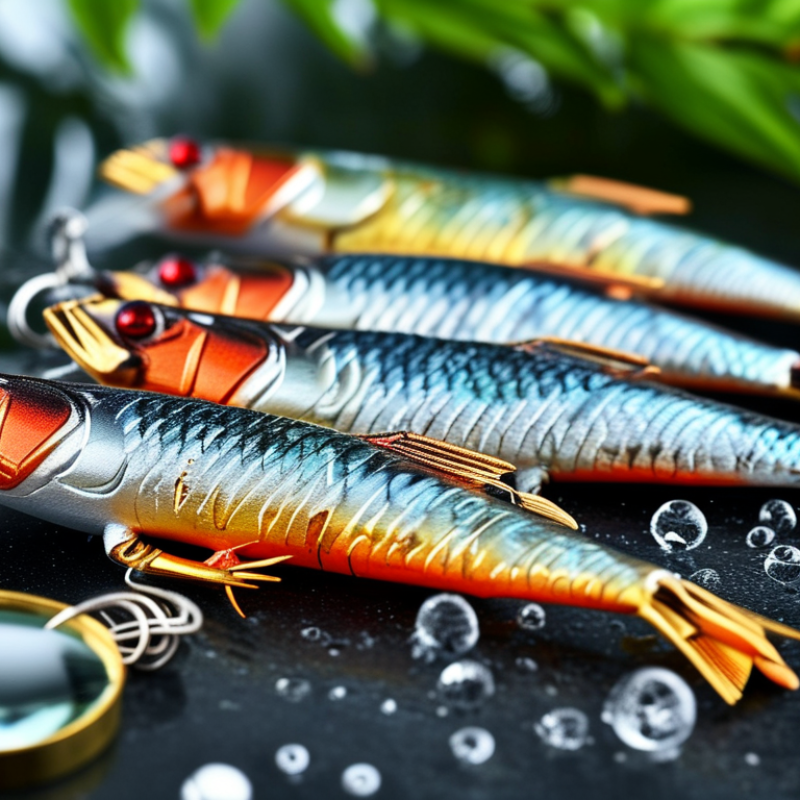
A reliable fish hook manufacturer in China should prove quality through repeatable processes, not confident sales language. During a factory visit, buyers should inspect wire storage, forging equipment, heat-treatment records, and final inspection stations. Clean work areas matter, but process discipline matters more.
Experienced manufacturers can explain steel selection, point geometry, barb formation, and corrosion protection in practical terms. They should provide material certificates and traceability for each production batch.
Sample hooks must undergo hardness, tensile, sharpness, and salt-spray testing. A hook that looks polished may still fail under pressure. That difference is important.
Ask for pre-production samples before approving a large order. Compare the hook’s weight, gap, eye alignment, and point penetration with the approved drawing. Reliable suppliers normally keep inspection records and accept reasonable third-party audits. They also communicate production changes quickly, including wire substitutions or coating delays. These details reveal operational maturity.
However, no factory is perfect. Test results can vary between batches, and visual inspection cannot replace laboratory checks. Buyers should review defect rates honestly instead of trusting one successful sample. Packaging also deserves attention; poorly separated hooks can scratch coatings during shipping. Clear tolerances, written specifications, and documented corrective actions reduce these risks. A dependable manufacturer welcomes difficult questions and shows evidence before requesting long-term trust.
Global buyers usually source several hook designs for different fishing conditions. The FAO State of World Fisheries and Aquaculture 2024 reported 185 million tonnes of aquatic animal production in 2022. This scale supports steady demand for reliable hooks across commercial, recreational, and aquaculture markets.
J-hooks remain common for bait fishing because their curved profile supports direct penetration. Circle hooks are widely selected for catch-and-release programs and some commercial fisheries. Their inward-pointing tips can reduce deep hooking when used correctly. However, technique matters as much as shape. A circle hook can still perform poorly with unsuitable bait or aggressive setting.
Treble hooks serve lures and hard baits, offering multiple points for short strikes. Baitholder hooks use small barbs along the shank to keep soft bait in place. Long-shank hooks help with narrow baits, while offset hooks can improve alignment in certain rigs. Barbless models simplify removal and may support fish welfare goals. The FAO Code of Conduct for Responsible Fisheries encourages practical measures that reduce unnecessary harm, but requirements differ by location.
Material also matters. High-carbon steel provides hardness, while corrosion-resistant coatings support saltwater use. Buyers should request tested dimensions, point strength, coating durability, and batch records. Wire thickness is not everything. I have seen a sharp hook fail after poor heat treatment. That detail deserves more attention. Product selection should match target species, water salinity, bait size, and local fishing rules.
Evaluating China’s leading fish hook manufacturers requires more than comparing catalog photos and low prices. Global buyers should examine steel grade, hook geometry, point sharpness, and tempering methods. A reliable supplier can explain these details clearly. Ask for production records, material certificates, and sample approval procedures.
Inspect physical samples under bright light. The hook point should be centered, clean, and consistent across a batch. Check the barb for smooth shaping without cracks. Measure the wire diameter with a caliper, then compare it with the approved drawing. Pull testing can reveal weak bends or poor heat treatment. Small differences matter.
Request recent quality reports and traceability records. A capable factory should identify raw material lots, coating batches, and inspection dates. Independent laboratory testing adds useful evidence, especially for corrosion resistance and load performance. Factory audits should also review worker training, equipment maintenance, and corrective-action records. A polished showroom proves little.
I once focused too heavily on unit price. The first samples looked acceptable, but several points dulled after repeated handling. That mistake changed my evaluation process. Now, I test samples after transport, storage, and simulated use. No supplier is perfect. Clear communication matters when defects appear. Check whether the manufacturer accepts responsibility, investigates causes, and documents improvements. Shipping capacity, packaging strength, and realistic lead times deserve equal attention before a purchase order.
The chart presents a practical 100-point evaluation framework for global buyers. Product quality and consistency receive the highest weighting, followed by manufacturing capacity, customization capability, compliance documentation, delivery performance, and commercial competitiveness. Buyers can apply the same criteria when comparing qualified suppliers without relying only on price.
For global buyers, a fish hook manufacturer should prove more than production capacity. The FAO’s The State of World Fisheries and Aquaculture 2024 reports 185.4 million tonnes of global fisheries and aquaculture production in 2022. That scale makes consistency essential. A reliable factory should document steel grades, heat-treatment cycles, coating thickness, and batch traceability. Small details matter.
Common hook materials include high-carbon steel, stainless steel, and corrosion-resistant alloys. High-carbon steel can deliver strong penetration and controlled flexibility after heat treatment. Stainless steel performs better in humid or saltwater environments, but it may require different forming temperatures. Buyers should request hardness results, tensile data, dimensional tolerances, and salt-spray testing. ASTM or ISO references can strengthen a technical file, but neither replaces product-specific testing. It is easy to overtrust a certificate.
Quality control should cover incoming wire, forging, sharpening, barb forming, coating, and final inspection. ISO’s 2022 Survey recorded more than 1.26 million ISO 9001 certificates worldwide, showing the broad use of structured quality systems. Yet certification alone does not prove every hook is consistent. Experienced auditors should compare inspection records with random samples from sealed cartons. I would also check point alignment under magnification and test hooks after repeated bending. Imperfections still appear. A strong supplier admits them, investigates the cause, and updates the process instead of hiding weak data.
For global buyers, a Chinese fish hook manufacturer should offer more than a low quotation. Export experience appears in clear specifications, stable packaging, and responsive document handling. Ask for material grade, hook size, point design, coating, barbed or barbless options, and tested load data. Confirm that certificates and shipping documents match the actual shipment. Small differences matter. A carton with mixed sizes can disrupt an entire tackle program. Check market-specific labeling and import requirements before production.
Customization may cover wire diameter, bend shape, point angle, finish, eye style, and retail packaging. Share drawings, target fish species, water conditions, and expected use before sampling. A capable factory should provide a sample schedule, revision record, and realistic production lead time. Do not accept “perfect” too quickly. Hook strength, sharpness, corrosion resistance, and consistency still need independent checks. In my view, buyers sometimes overvalue appearance and undercheck batch variation.
Export service also includes minimum order quantities, payment terms, inspection access, carton marks, and after-sales response. Request pre-shipment inspection or third-party testing when volumes are significant. Keep approved samples and written tolerances. They protect both sides. Check whether the supplier can separate lots and trace raw materials if a defect appears. Pricing can change with steel, coatings, tooling, and freight. A transparent quotation should show these drivers, not hide them. Some suppliers may promise short lead times, yet capacity changes during peak seasons. Build that uncertainty into purchasing plans.
| Rank | Anonymous Manufacturer Profile | Production Area | Main Hook Types | Common Materials | Surface Finishes | Typical MOQ | Customization Services | Export Support | Typical Lead Time | Key Buyer Consideration |
|---|---|---|---|---|---|---|---|---|---|---|
| 1 | High-volume sport-fishing hook supplier | Shandong coastal manufacturing cluster | J-hooks, circle hooks, treble hooks | High-carbon steel, stainless steel | Black nickel, tin, bronze | 10,000–30,000 pieces | Size, point style, barb configuration, packaging | Commercial invoice, packing list, export booking, sample documentation | 25–40 days after sample approval | Confirm tensile strength, point consistency, and salt-spray performance. |
| 2 | OEM freshwater tackle hook producer | Jiangsu fishing-equipment zone | Baitholder, worm, octopus hooks | High-carbon steel with chemically sharpened points | Nickel, black chrome, red finish | 5,000–20,000 pieces | Custom sizes, eye shapes, barbs, labels, retail cards | OEM artwork review, carton marking, inspection coordination | 20–35 days for repeat designs | Request production samples to check bait-holding ridges and point sharpness. |
| 3 | Saltwater corrosion-resistant hook specialist | Zhejiang coastal industrial area | In-line single, circle, heavy-duty J-hooks | Stainless steel, high-carbon alloy steel | Electro-polished, tin-plated, PTFE-coated | 3,000–15,000 pieces | Wire diameter, bend geometry, coating, corrosion specification | Material certificates, coating reports, export cartons, freight assistance | 30–45 days | Check the exact stainless-steel grade and coating thickness before ordering. |
| 4 | Small-batch custom hook workshop | Fujian tackle-manufacturing region | Fly hooks, specialty single hooks, lure hooks | Carbon steel, stainless steel | Black finish, nickel, antique bronze | 1,000–5,000 pieces | Prototype development, custom bends, micro sizes, sample revisions | Sample invoices, export packing, courier samples, basic inspection support | 30–50 days including tooling or trial production | Best suited to new designs; clarify tooling ownership and revision charges. |
| 5 | Automated high-precision hook line | Guangdong metal-products cluster | Treble, double, lure replacement hooks | High-carbon steel, stainless steel | Black nickel, matte black, gold-tone plating | 20,000–50,000 pieces | Machine-cut sizes, color plating, blister packs, barcode labels | Container consolidation, carton standards, third-party inspection access | 25–40 days | Evaluate batch consistency, plating adhesion, and packaging accuracy. |
| 6 | Hand-finished lure-hook manufacturer | Shandong inland production base | Feathered trebles, dressed singles, lure hooks | High-carbon steel, stainless steel | Nickel, black nickel, colored coatings | 2,000–10,000 pieces | Dressing materials, color combinations, hook size, retail presentation | Product photography support, export cartons, mixed-SKU packing | 30–45 days | Inspect hand-tied components, alignment, and pull resistance. |
| 7 | Retail-ready fishing accessory supplier | Zhejiang export-oriented cluster | Assorted hook sets, bait hooks, terminal tackle hooks | Carbon steel, stainless steel | Nickel, tin, black chrome | 500–3,000 retail packs | Printed cards, polybags, assortments, multilingual packaging | Barcode placement, carton labeling, export documentation, consolidation | 25–40 days | Confirm packaging compliance, language requirements, and SKU separation. |
| 8 | Heavy-duty commercial fishing hook producer | Fujian coastal production area | Longline, tuna, circle, big-game hooks | Forged high-carbon steel, stainless steel | Tin, corrosion-resistant alloy plating | 5,000–25,000 pieces | Forging profile, shank length, eye orientation, barb and point geometry | Load-test coordination, material documents, export freight support | 35–55 days | Require documented load testing and verify compliance with destination-market rules. |
| 9 | Value-focused mass-market hook factory | Hebei metal-processing area | General-purpose J-hooks, baitholders, hook assortments | Carbon steel | Nickel, black finish, bronze | 30,000–100,000 pieces | Standard-size adjustments, bulk packing, basic label printing | FOB quotation, carton packing, standard export paperwork | 20–35 days | Compare total landed cost, defect allowance, and packaging durability. |
| 10 | Custom terminal-tackle development supplier | Ningbo export manufacturing area | Specialty hooks, double hooks, rig components | Stainless steel, high-carbon steel, alloy steel | Electro-polished, nickel, black nickel | 1,000–10,000 pieces | Engineering drawings, prototypes, mixed materials, custom assemblies | Technical quotation, sample logistics, inspection support, consolidated shipping | 35–60 days for new products | Define tolerances, intellectual-property ownership, and approval stages in writing. |
Note: The profiles above are anonymized, indicative supplier categories based on common Chinese fish-hook manufacturing and export practices. Buyers should verify current capacity, certifications, material grades, testing records, pricing, MOQ, and delivery terms directly before placing an order.