
Ncr Carbonless Paper 2 Part remains a practical choice for invoices, delivery notes, purchase orders, and service records. It creates two readable copies without carbon sheets. The top copy receives the original writing. The second copy records the same details through pressure-sensitive coating.
Frank Romano, a respected printing educator and industry commentator, has expressed a useful principle: “A good form should make information easy to capture, read, and retain.” That idea fits NCR Carbonless Paper 2 Part closely. Performance depends on more than paper color. Coating quality, writing pressure, sheet sequence, paper weight, printing clarity, and storage conditions all influence the final copy. Small details matter.
This guide examines the top 10 NCR Carbonless Paper 2 Part types used across business and field operations. It will compare white and yellow sets, white and pink sets, white and blue sets, white and green sets, and other common color combinations. It will also consider standard cut sheets, continuous forms, numbered sets, pre-printed forms, custom sizes, adhesive-backed formats, and recycled options.
Some categories overlap. That is worth admitting. A form can be both numbered and custom printed. A recycled set may also use a popular color sequence. Real purchasing decisions are rarely perfectly tidy. The discussion will therefore focus on practical differences, including writing feel, copy contrast, filing needs, printing compatibility, and application suitability. Expect clear guidance, but not exaggerated promises. The best type depends on the work, the users, and the records that must remain readable months later.
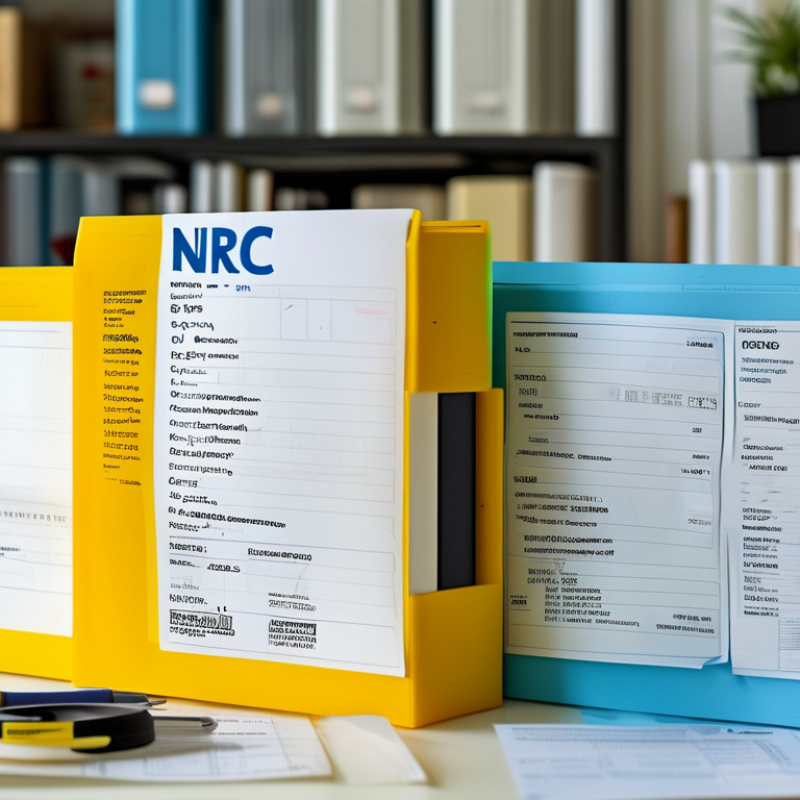
NCR carbonless 2-part paper creates two matching records without traditional carbon sheets. It uses pressure-sensitive coating instead. The top sheet is usually white, while the duplicate sheet is commonly yellow. When a pen, typewriter, or printer applies pressure, tiny capsules release a color-forming chemical. The coating on the lower sheet reacts and reproduces the writing.
This system works best with suitable pressure. A firm ballpoint pen usually produces clearer results than a blunt pencil. In print-room testing, clean rollers and correct paper alignment make a noticeable difference. The two sheets should remain together during writing. Otherwise, details may appear incomplete or faint. That small issue causes real problems on delivery notes and service records.
Common 2-part formats include loose sets, glued pads, continuous computer forms, perforated sheets, numbered forms, and custom-printed invoices. Other variations use adhesive edges, special sizes, or moisture-resistant coatings. Storage also matters. Heat, humidity, and heavy pressure can affect image quality before use. Keep the paper flat and away from direct sunlight. One detail is easy to miss: carbonless paper is not always ideal for dark, highly textured printing. Test a sample with the intended pen and printer first. It may seem unnecessary. It often prevents waste.
| No. | 2-Part Form Type | Typical Purpose | Common Finished Size | Sheet Order | Typical Information Captured | Practical Advantage |
|---|---|---|---|---|---|---|
| 1 | Sales Invoice | Provides a customer copy and an internal accounting copy. | A4: 210 × 297 mm Letter: 8.5 × 11 in | Top: white CB Bottom: yellow CF | Invoice number, date, customer details, item description, quantity, price, tax, and total. | Creates an immediate duplicate without carbon sheets or photocopying. |
| 2 | Sales Receipt | Documents a completed payment or over-the-counter sale. | A6: 105 × 148 mm Receipt size: approximately 80 × 180 mm | Top: white CB Bottom: yellow CF | Receipt number, date, products, amount paid, payment method, and authorization signature. | The customer and seller can retain matching transaction records. |
| 3 | Purchase Order | Records a buyer's request for goods or services. | A4: 210 × 297 mm Letter: 8.5 × 11 in | Top: white CB Bottom: yellow CF | Order number, supplier, delivery address, item codes, quantities, requested date, and approval. | The purchasing department and supplier receive identical order details. |
| 4 | Delivery Note | Confirms that goods were dispatched and received. | A5: 148 × 210 mm A4: 210 × 297 mm | Top: white CB Bottom: yellow CF | Delivery number, sender, recipient, product description, quantities, condition, and signature. | A signed duplicate supports receiving control and shipment traceability. |
| 5 | Estimate or Quotation | Presents proposed prices and terms before work begins. | A4: 210 × 297 mm Letter: 8.5 × 11 in | Top: white CB Bottom: yellow CF | Customer details, scope of work, materials, labor, validity period, terms, and approval signature. | Allows the salesperson and customer to retain the same pricing proposal. |
| 6 | Work Order | Authorizes and records a repair, maintenance, or production task. | A4: 210 × 297 mm Letter: 8.5 × 11 in | Top: white CB Bottom: yellow CF | Job number, requester, equipment, instructions, labor, materials, completion date, and sign-off. | Field staff can issue a copy while the office retains the original record. |
| 7 | Service Report | Summarizes work performed during a customer service visit. | A4: 210 × 297 mm Letter: 8.5 × 11 in | Top: white CB Bottom: yellow CF | Technician, visit date, fault description, actions taken, parts used, recommendations, and customer signature. | Provides a signed record for both the service provider and customer. |
| 8 | Inventory Transfer Form | Tracks stock moved between locations, departments, or storage areas. | A5: 148 × 210 mm A4: 210 × 297 mm | Top: white CB Bottom: yellow CF | Transfer number, source, destination, stock codes, quantities, dates, and signatures. | Creates matching dispatch and receiving records for inventory reconciliation. |
| 9 | Incident or Inspection Report | Documents an event, inspection result, defect, or corrective action. | A4: 210 × 297 mm Letter: 8.5 × 11 in | Top: white CB Bottom: yellow CF | Date, location, people involved, observations, immediate action, follow-up, and signatures. | A duplicate can be submitted to administration while the original stays with the responsible department. |
| 10 | Parking or Service Ticket | Provides a small customer-facing ticket and an operational record. | A6: 105 × 148 mm Custom ticket: approximately 75 × 150 mm | Top: white CB Bottom: yellow CF | Ticket number, date and time, vehicle or service details, fee, validation, and staff initials. | Compact duplicate documentation is convenient for high-volume transactions. |
Two-part NCR carbonless paper creates an original and one duplicate without carbon sheets. Its main feature is coating design. The top sheet carries microcapsules underneath, while the bottom sheet receives the image. Pressure from a pen, printer, or numbering machine activates the transfer.
Different types vary by sheet weight, coating sensitivity, and writing feel. Lightweight forms fold easily inside invoices or delivery books. Heavier sheets feel more professional and resist tearing. Some surfaces accept handwriting clearly but perform poorly with certain impact printers. That detail is often missed. A practical test should include a ballpoint pen, a firm signature, and a short printed line.
Color is another useful distinction. White and yellow combinations make copies easy to separate during office filing. Other color sets support departments, such as sales, transport, and accounting. Paper brightness also affects readability under fluorescent light. Moisture resistance matters in warehouses, kitchens, and outdoor dispatch areas. However, extra resistance can make the sheet feel less natural.
Form size and perforation shape the working experience. A narrow receipt form saves paper, while a wider invoice leaves space for item descriptions. Clean perforations help staff detach copies without damaging text. I have found that overly sensitive sheets can create unwanted marks during stacking. That problem may appear small, but it wastes time. The best selection depends on writing pressure, printer compatibility, storage conditions, and filing habits. Specifications help, but a real sample reveals more.
Two-part NCR forms normally contain a CB top sheet and a CF bottom sheet. Pressure from writing or printing transfers the image without a carbon interleaf. The chart compares common color combinations by practical workflow visibility, using a 1–5 rating based on copy separation, readability, and document sorting.
White/yellow is widely selected for invoices, receipts, and order forms because the yellow copy is easy to identify. White/pink, white/blue, and white/green provide strong departmental or customer-copy separation. White/white offers a discreet appearance, while goldenrod, canary, orange, red, and gray copies are useful when quick visual sorting is important. Color availability and exact paper weight may vary by supplier; the image-transfer principle remains the same.
Two-part NCR carbonless paper uses a CB top sheet and a CF bottom sheet. Pressure transfers writing without carbon ink. The format suits quick duplicate records.
The ten most practical types are invoices, sales orders, delivery notes, dispatch notes, purchase orders, credit memos, work orders, service tickets, inventory transfers, and inspection forms. Invoices usually need a clean white original and a colored customer copy. Delivery notes often benefit from perforation and preprinted numbering. Service tickets need stronger paper because technicians write on uneven surfaces. Inspection forms may require boxes, signatures, and narrow writing fields.
Smithers’ The Future of Carbonless Paper to 2028 identifies transactional documents and business forms as established carbonless applications. Its forecast horizon reaches 2028. EPA’s 2020 Sustainable Materials Management report recorded 67.4 million tons of paper and paperboard in U.S. municipal solid waste, with 46.0 million tons recycled. That broader figure is not a carbonless-specific recycling rate. The difference matters. Paper weight, coating chemistry, and local mill rules can change the result. ISO 9706 also supports permanence-focused paper selection, but durability alone does not guarantee excellent duplicate transfer. A practical specification should test handwriting pressure, copy contrast, sheet curl, moisture exposure, and filing strength before volume production.
NCR carbonless 2-part sets usually combine a CB top sheet with a CF receiving sheet. Their performance differs through color, coating, format, and application.
The common white/yellow set suits invoices and customer copies. White/pink improves visual separation for receipts. White/blue works well for sales orders, while white/green supports warehouse delivery records. White/orange gives stronger attention to urgent dispatch paperwork. White/white looks cleaner for internal forms, but filing errors become more likely.
Other leading types include preprinted invoice sets, receipt-book sets, snap-out forms, continuous computer forms, and moisture-resistant forms.
Preprinted sets reduce writing time and improve consistency. Receipt books are portable, though small writing areas limit detail. Snap-out forms separate neatly at counters. Continuous forms support high-volume printers and faster processing. Moisture-resistant stock protects information in transport, but it may feel less smooth during handwriting. It is not always better.
A 2024 market assessment by Grand View Research places the carbonless paper market on a steady growth path, supported by invoices, logistics records, and administrative paperwork. Smithers’ 2024 printing outlook also identifies transactional documents as a continuing application, despite digital substitution.
Field experience shows impression quality depends heavily on pen pressure, storage humidity, and press settings. Test before ordering. A perfect-looking sample can still fail under damp warehouse conditions.
Choosing the right two-part NCR paper starts with the form’s actual working conditions. A two-part set usually contains a coated top sheet and a pressure-sensitive bottom sheet. The top page receives handwriting, while the lower page creates a readable duplicate. Common types differ by paper shade, sheet weight, surface finish, size, and coating performance.
Match the paper to the writing method. Ballpoint pens and firm writing pressure usually transfer clearly, but light-touch writing may need a more responsive coating. Test the paper with the exact pen, printer, and form layout. A smooth finish can support clean printing, while a slightly stronger sheet may suit invoices handled repeatedly. Pale colors improve filing speed. Strong contrast helps staff compare copies. Do not choose by appearance alone.
Consider the environment, too. Humid storage can affect feeding and image transfer. Fast office printers may require suitable thickness and flatness. Check whether the form needs glued edges, perforations, sequential numbering, or a security tint. For frequent handling, select a durable bottom sheet that will not tear near the binding edge. Recycled content may support purchasing goals, but its opacity and print behavior should be verified.
A small trial pack is worth the effort. It exposes problems that a specification sheet misses. One overlooked detail is writing pressure. Another is storage temperature. We sometimes assume every two-part set performs equally; that assumption needs testing. Record transfer clarity, printer feeding, smudging, and filing performance before approving the final type.