
Blog
China Top Carole Fabrics Drapery Suppliers for Global Buyers
China has become a significant sourcing destination for global buyers seeking carole fabrics drapery. Its supplier base includes weaving mills, finishing factories, custom sewing workshops, and export-focused manufacturers. This range gives buyers more choices, but it also demands careful evaluation.
Textile designer William Morris famously said, “Have nothing in your houses that you do not know to be useful, or believe to be beautiful.” His principle remains relevant here. Drapery should look refined, hang naturally, and perform reliably beside windows, furniture, and changing daylight. A strong supplier must explain fiber content, fabric weight, width, shrinkage, colorfastness, and care requirements clearly.
Details matter.
The best China suppliers usually provide sample books, strike-offs, technical data, and production references. Global buyers should also examine sewing quality, lining options, packaging, inspection procedures, and communication speed. A sample may feel soft in the hand, yet perform poorly after washing or prolonged sunlight exposure. That risk is easy to underestimate.
This guide introduces leading Chinese suppliers connected with carole fabrics drapery and related decorative textiles. It considers manufacturing experience, customization ability, export readiness, quality controls, and service reliability. Certifications can support confidence, but paperwork alone proves little. Factory visits, independent inspections, and small trial orders remain valuable.
No supplier is perfect.
Some factories excel at large-volume hotel projects but struggle with small residential orders. Others offer beautiful designs but inconsistent delivery times. Buyers must compare evidence, not promises. The goal is not simply to find a low price. It is to identify a dependable partner that can reproduce color, texture, dimensions, and finishing standards across repeated shipments.
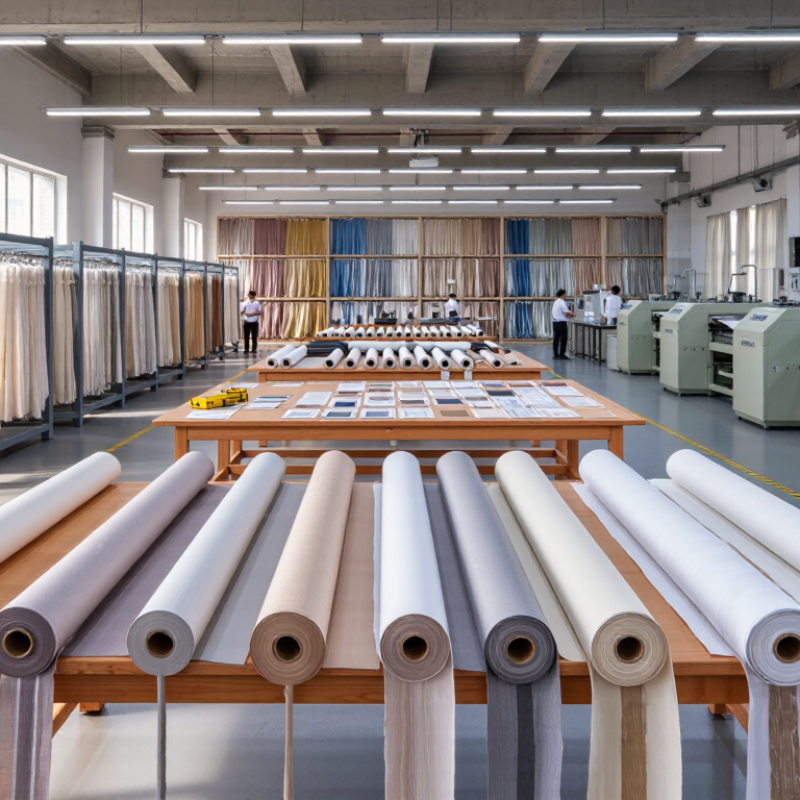
Understanding Carole Fabrics and Its Role in Drapery Production
Carole fabrics are often associated with decorative drapery that combines visual softness with practical performance. However, the term is not a universally standardized textile category. Suppliers may use it for different constructions, including woven polyester, blended yarns, or lightly textured jacquards. Buyers should request a clear fiber content sheet before comparing quotations.
In production, fabric weight affects nearly every decision. A medium-weight cloth may form clean pleats and move easily on a track. Heavier material can improve fall and light control, but it may require stronger headings, hooks, and hardware. We inspect the selvage, surface, and reverse side during sampling. Small flaws become obvious across a wide curtain.
Color testing matters too. Daylight can reveal undertones that showroom lighting hides. A reliable supplier should provide physical samples, shrinkage data, repeat measurements, and test results for colorfastness. Flame-performance requirements may also differ by market, so buyers must confirm the applicable standard before production. This step is easy to overlook.
Some choices remain subjective. A slightly uneven texture may create character, yet it can complicate panel matching. I would not reject it automatically, but I would document acceptable variation in writing. Sample approval should cover width, shade, drape, and sewing behavior. These details protect both the finished room and the purchasing decision.
China Top Carole Fabrics Drapery Suppliers for Global Buyers - Understanding Carole Fabrics and Its Role in Drapery Production
| Fabric Category | Typical Fiber Composition | Common Finished Width | Typical Weight | Light-Control Performance | Drapery Production Role | Key Buyer Checks |
|---|---|---|---|---|---|---|
| Polyester Sheer | 100% polyester or polyester blends | 280–320 cm; 110–126 in | 50–100 g/m² | Filters glare while maintaining daylight and outward visibility | Sheer panels, voile layers, and decorative window dressing | Transparency, snag resistance, width consistency, colorfastness, and seam appearance |
| Polyester Dimout | 100% polyester, often with dense yarn construction | 280–320 cm; 110–126 in | 180–300 g/m² | Reduces incoming light substantially but is not necessarily fully opaque | Hotel curtains, bedroom curtains, and lined residential drapes | Light-blocking percentage, coating or yarn construction, wash shrinkage, and formaldehyde or chemical test reports |
| Polyester Blackout | Polyester face fabric with a multi-layer opaque construction or backing | 280–320 cm; 110–126 in | 250–450 g/m² | Designed for very high light reduction; edge gaps can still allow light | Bedroom, theater, nursery, hospitality, and energy-conscious applications | Blackout test method, backing durability, odor, peeling, coating migration, and sewing performance |
| Polyester Jacquard | Polyester yarns with woven or dobby pattern structures | 140–320 cm; 55–126 in | 180–350 g/m² | Moderate to strong light reduction depending on density and lining | Decorative face fabric for lined or unlined formal drapery | Pattern repeat, yarn-dyed or piece-dyed construction, abrasion resistance, and color matching |
| Polyester Velvet | Polyester pile with a knitted or woven ground | 140–150 cm; 55–59 in | 250–500 g/m² | Good privacy and light absorption; lining may be required for blackout use | Luxury curtains, stage drapes, acoustic treatments, and accent panels | Pile direction, shading, crushing recovery, seam allowance, rub fastness, and roll presentation |
| Linen-Look Fabric | Usually polyester or polyester-viscose; not necessarily genuine linen | 140–320 cm; 55–126 in | 120–280 g/m² | Diffuses daylight; privacy varies with weave density | Contemporary residential curtains and natural-look interiors | Actual fiber content, slub consistency, shrinkage, wrinkling, pilling, and care-label requirements |
| Cotton or Cotton Blend | Cotton, polyester-cotton, or cotton-viscose blends | 140–300 cm; 55–118 in | 150–350 g/m² | Moderate privacy; lining is commonly used for stronger light control | Casual, traditional, and washable residential drapery | Dimensional stability, colorfastness to washing, fiber declaration, mildew control, and crease recovery |
| Flame-Retardant Drapery Fabric | Inherently or chemically flame-retardant polyester and selected blends | 140–320 cm; 55–126 in | 160–400 g/m² | Varies by weave, coating, and lining system | Hotels, public buildings, healthcare, education, and contract interiors | Destination-country fire standard, certificate scope, laundering durability, smoke behavior, and test report validity |
Related Posts
-
China Top 10 Drapery Fabric Suppliers in 2026?
-
Top Tips for Choosing Carole Drapery Fabric for Your Home Decor?
-
Top Tips for Choosing Window Drapery Fabric for Your Home?
-
Top 10 China Window Drapery Fabric Options for Global Buyers?
-
10 Best Custom Drapery Fabric Options for Every Home Style?
-
Transform Your Space with Sustainable Window Drapery Fabric Choices