Blog

China Top 10 Fabric for Window Shades Suppliers?

China’s window-covering industry combines deep textile experience with increasingly precise technical manufacturing. This makes China a practical sourcing destination for fabric for window shades, including polyester, fiberglass, recycled yarn, and blackout materials. Suppliers often serve residential, hospitality, healthcare, and commercial projects.

The International Energy Agency’s Buildings report identifies buildings as responsible for roughly 30% of global final energy consumption. That figure explains why solar-control textiles receive growing attention from architects and buyers. The U.S. Department of Energy also recognizes window attachments as useful tools for managing heat gain, glare, and indoor comfort. Fabric performance matters.

Market reports from Grand View Research and Mordor Intelligence describe continued expansion in window coverings and smart shading. However, their market boundaries differ. Some include blinds, hardware, and automation. Others focus mainly on textile products. Comparisons can become misleading.

This guide reviews ten China-based suppliers through practical sourcing criteria. These include fabric composition, openness factor, coating stability, color consistency, fire-performance documentation, testing capacity, minimum order quantities, and export experience. A sample roll may look excellent under showroom lighting. It may appear different beside a sun-facing window.

Supplier claims require verification. Ask for technical data sheets, laboratory reports, production samples, and batch references. Recycled content also needs evidence, not attractive wording. Certifications can support trust, but they do not replace independent inspection.

The ranking is not perfectly objective. It reflects publicly available information and common buyer priorities. Lead times, pricing, and capabilities can change quickly. Still, these suppliers offer a useful starting point for professional sourcing decisions in 2025 and beyond.
China Top 10 Fabric for Window Shades Suppliers?

Window-Shade Fabric Basics: Openness Factors from 1% to 10%

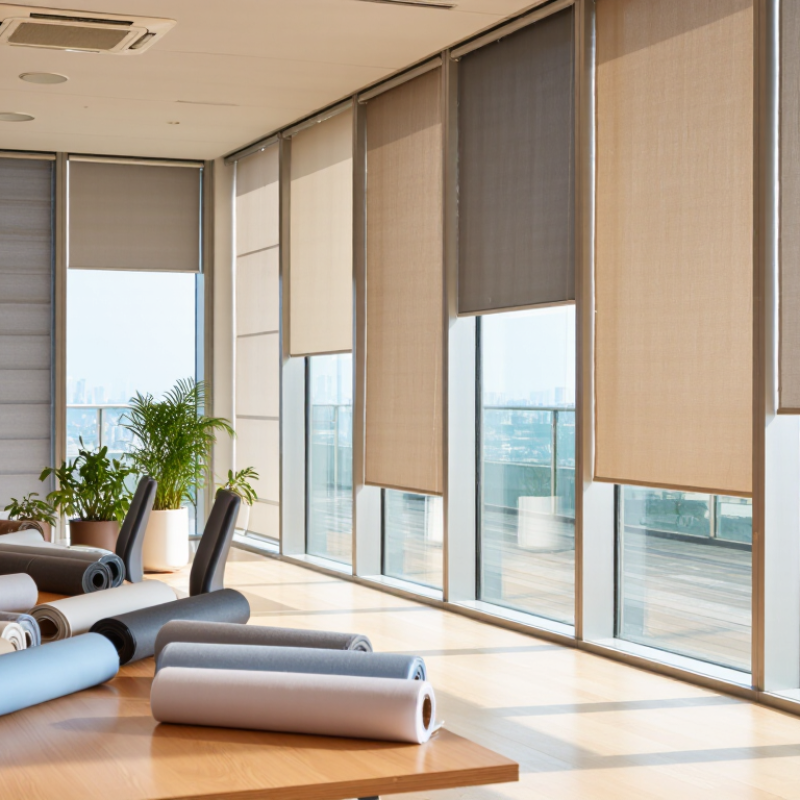
Openness factor describes the percentage of fabric area made from visible gaps. A 1% fabric has a tight weave and blocks strong daylight effectively. It can reduce glare near south-facing windows. However, it may create a darker room and limit outward views. A 3% or 5% fabric offers a more practical balance. It softens sunlight while preserving useful daylight and partial visibility.

A 10% fabric looks noticeably more open. It supports brighter interiors and clearer daytime views. Privacy becomes weaker, especially after sunset when indoor lights are on. Darker fabrics often reduce glare better than lighter fabrics, even with the same openness factor. Window direction, glass type, and room use also change performance. The number alone never tells the whole story.

When comparing leading fabric suppliers in China, request physical samples and technical data sheets. Check openness, width tolerance, coating quality, edge stability, and color consistency between production lots. Ask for independent performance reports when solar control matters. In my experience, sample testing beside the actual window reveals problems early. I once selected fabric by openness alone. That shortcut was wrong. The fabric looked excellent in a showroom but created distracting reflections at home. Test it during morning and afternoon light. A small sample can still mislead, so larger mock-ups deserve consideration.

Performance Metrics: UV Blocking up to 99% and Solar Heat Control

China Top 10 Fabric for Window Shades Suppliers?

High-performance shade fabric is increasingly judged by measurable solar results, not appearance alone. Some tested fabrics block up to 99% of ultraviolet radiation, helping reduce fading on timber floors, curtains, and upholstery. However, the result depends on fabric color, openness factor, glazing, and installation quality. A laboratory figure is not always a room result.

The U.S. Department of Energy reports that windows can account for 25%–30% of residential heating and cooling energy use. Solar-control fabrics can reduce glare and limit heat entering through sun-facing glass. For professional comparison, buyers should request solar heat gain coefficient data, visible transmittance, and UV transmission results. The National Fenestration Rating Council uses SHGC to measure how much solar heat passes through a complete window system. Fabric performance alone cannot replace this assessment.

A practical test is revealing. Place a sample behind south-facing glass, then measure surface temperature before and after midday exposure. Small differences matter. Still, a 99% UV-blocking claim may not describe heat reduction, and this distinction is often overlooked. Supplier evaluations should include accredited test methods, batch consistency, color stability, and installation guidance. Lower openness may improve solar control, but it can reduce outward visibility and natural light. The best specification balances protection, comfort, and daily usability rather than chasing one impressive percentage.

Supplier Standards: GSM, Width, Fire Ratings, and MOQ Requirements

When comparing China’s top ten fabric suppliers for window shades, start with measurable specifications, not polished catalogs.

GSM affects opacity, drape, handling, and the shade’s final weight. A blackout fabric near 300 GSM may feel stable, but heavier fabric is not automatically better. I have seen dense rolls create oversized tubes and slower installation.

Ask for GSM tolerance, weighing several points across the roll. One sample can mislead.

Width should match your cutting plan, including edge loss and pattern alignment. Request finished width, usable width, roll length, and allowed variation in writing.

A listed 2.8-meter width may include selvage that cannot enter the finished shade. Measure twice.

Check shrinkage after cleaning or humidity exposure, especially for coated fabrics.

Fire performance needs more than a certificate image. Confirm the test method, fabric construction, production lot, and certificate validity.

Requirements differ by destination, building type, and installation location. Use an accredited laboratory where project risk demands it.

MOQ often reveals how a supplier manages production. Ask whether the minimum applies per color, design, width, or combined order.

For development work, negotiate sample lengths before committing to full rolls.

Low MOQ can raise unit cost, while high MOQ can trap cash in slow colors.

Request lead times for sampling, bulk production, inspection, and replacement.

Keep approved swatches and signed specifications beside the purchase order.

Suppliers sometimes promise tighter tolerances than their machinery can maintain. That gap deserves a trial order, not an argument.

China’s Top 10 Suppliers: Fabrics, Certifications, Capacity, and Export Reach

China’s Top 10 Suppliers: Fabrics, Certifications, Capacity, and Export Reach

China remains a major sourcing base for roller shade and sunscreen fabrics. Mordor Intelligence estimates the global window coverings market will reach about US$18.9 billion by 2030, with steady demand for motorized and energy-saving products. A practical top-ten shortlist should examine openness, blackout, dimout, and polyester-coated fabrics. It should also review weaving control, coating consistency, and color stability under strong sunlight.

Certification separates a sample from a dependable supply program. Qualified suppliers commonly provide ISO 9001 systems, OEKO-TEX Standard 100 testing, REACH-related documentation, and GRS certificates for recycled content. Fire performance requires project-specific evidence, not a general claim. SGS and Intertek testing reports can verify weight, tear strength, lightfastness, and formaldehyde limits. A certificate is not proof of every production lot. Buyers should request recent batch records and sealed samples.

Capacity also needs careful reading. A factory may report 10 million square meters annually, yet available capacity can fall during peak seasons. Export reach should be checked through customs records, local warehouses, and experience with North American, European, Middle Eastern, and Australian requirements. UN Comtrade data continues to place China among the leading exporters of textile fabrics and made-up textile articles. Still, export volume alone does not prove service quality. My screening can miss small but technically excellent mills; that is an uncomfortable limitation. Visiting the coating line, checking carton labels, and comparing three consecutive lots often reveal more than a polished brochure.

How to Compare Suppliers by Quality, Customization, Lead Time, and Price

China Top 10 Fabric for Window Shades Suppliers?

Comparing China’s top ten fabric suppliers requires more than checking catalog photos. Grand View Research estimates the global window coverings market reached about USD 13.8 billion in 2023, with continued growth through 2030. This growth increases supplier choices, but not necessarily consistency. Request the same 300 mm fabric sample from every supplier. Inspect coating evenness, edge fraying, color under daylight, and odor after unpacking. Small defects become obvious across a full window.

Quality should include test evidence, not vague claims. Ask for fabric weight, light-filtering performance, colorfastness results, and fire-safety documentation relevant to your market. Customization also needs precise limits. Confirm available widths, roll lengths, backing colors, embossing options, and minimum order quantities. A supplier may accept custom colors, but charge heavily for small batches. That detail is often missed.

Lead time should be measured from approved artwork, not the first inquiry. Request a written schedule for sampling, production, inspection, and export packing. Industry research from The Freedonia Group consistently identifies product variety and replacement demand as major forces in window coverings. Therefore, flexible replenishment can matter more than the lowest first-order price. Compare total landed cost, including tooling, testing, packaging, freight, and rejected rolls. Cheap is not always efficient. Some supplier promises remain unclear until production begins, so keep a small trial order before committing to volume.

China Top 10 Fabric for Window Shades Suppliers? - How to Compare Suppliers by Quality, Customization, Lead Time, and Price

Indicative comparison of representative supplier profiles for window shade fabrics. Figures are typical market ranges and should be verified with current quotations, samples, and technical documents.

Rank Anonymous Supplier Profile Primary Fabric Type Quality Level Typical Technical Features Customization MOQ Sample Lead Time Bulk Lead Time Indicative FOB Price Best Fit
1 Profile A — Premium Architectural Fabric Mill Fiberglass sunscreen fabric Very High 1%–5% openness; PVC-coated fiberglass; strong dimensional stability; low-VOC options; consistent color matching Excellent 300–500 m 5–10 days 25–40 days US$4.80–8.50/m² Commercial and hospitality projects
2 Profile B — High-Volume Roller Shade Manufacturer Polyester sunscreen fabric High 1%–10% openness; heat-set polyester; broad color range; suitable for standard roller shades Very Good 200–500 m 5–8 days 20–35 days US$2.80–5.50/m² Residential and mid-market projects
3 Profile C — Blackout Fabric Specialist Triple-weave polyester blackout High Room-darkening construction; 280–360 GSM; thermal backing options; smooth roll-up performance Excellent 300–800 m 7–12 days 25–45 days US$3.20–6.20/m² Bedrooms, hotels, and media rooms
4 Profile D — Eco-Focused Recycled Textile Supplier Recycled PET sunscreen fabric High Post-consumer recycled polyester; 3%–5% openness; recycled-content documentation available Very Good 300–600 m 7–14 days 30–45 days US$4.00–7.20/m² Green building and sustainable interiors
5 Profile E — Value-Oriented Fabric Converter Coated polyester dimout fabric Medium-High 180–260 GSM; moderate light reduction; standard colors; economical coating process Good 100–300 m 4–7 days 18–30 days US$1.80–3.80/m² Budget residential programs
6 Profile F — Premium Linen-Look Textile Producer Linen-look polyester jacquard High Textured surface; 250–330 GSM; decorative weave; optional dimout backing; enhanced drape Excellent 300–700 m 8–15 days 30–50 days US$4.50–8.00/m² Luxury homes and boutique hotels
7 Profile G — Flame-Retardant Contract Textile Supplier FR polyester sunscreen fabric Very High Inherently or chemically flame-retardant options; test reports supplied by construction; 1%–5% openness Very Good 500–1,000 m 10–18 days 35–55 days US$5.50–10.00/m² Healthcare, education, and public buildings
8 Profile H — Small-Batch Custom Color Supplier Solution-dyed polyester fabric Medium-High Custom Pantone color matching; 1%–3% openness; suitable for coordinated interior schemes Excellent 100–250 m 10–20 days 30–50 days US$3.80–7.00/m² Design studios and private-label collections
9 Profile I — Integrated Shade System Manufacturer Polyester and fiberglass mixed portfolio High Fabric and hardware coordination; multiple openness levels; roll-width planning; installation support Very Good 200–500 m 7–14 days 25–45 days US$3.50–8.50/m² Complete window-covering projects
10 Profile J — Export-Oriented Standard Fabric Supplier Basic polyester roller shade fabric Medium Standard 3%–5% openness; common widths and colors; stable supply for repeat orders Good 100–300 m 4–7 days 18–30 days US$2.00–4.20/m² Retailers and standard-size shade programs

Comparison criteria: Quality considers dimensional stability, coating consistency, colorfastness, abrasion resistance, and available test documentation. Customization includes color matching, openness factor, width, texture, backing, flame-retardant treatment, and private-label packaging. Prices are indicative FOB ranges in USD per square meter and may vary according to fabric construction, order volume, width, certifications, exchange rates, and shipping terms.