
Blog

What Is PET Clear Sheet Used For?

What is PET Clear Sheet used for? In practical manufacturing, it is a transparent polyester sheet chosen for visibility, clean presentation, and reliable dimensional stability. PET stands for polyethylene terephthalate, a material familiar from packaging and industrial production. Its smooth surface can display products clearly while helping protect them from dust, light handling, and everyday contact. It is not simply “clear plastic.” Thickness, finish, forming method, and application conditions all affect performance.

PET Clear Sheet is commonly used for product packaging, retail boxes, protective covers, document sleeves, display panels, and printed promotional materials. A bakery may use it for a clear window on a cake box. A workshop may cut it into lightweight guards or separators. Retail designers often prefer it when the product must remain visible without opening the package. Some grades also support thermoforming, allowing manufacturers to create trays, shaped inserts, and custom compartments with consistent edges.

Choosing the right sheet requires more than comparing prices. A supplier should confirm thickness tolerance, clarity, surface quality, and compatibility with printing or heat forming. The operating temperature matters too. Standard PET may not suit every high-heat environment, and outdoor exposure can change the decision. This point is easy to overlook. A thicker sheet is not always better; it may add unnecessary weight or complicate fabrication. In my experience, careful sampling under real lighting and handling conditions prevents disappointing results. PET Clear Sheet offers useful balance, but no material solves every design problem.
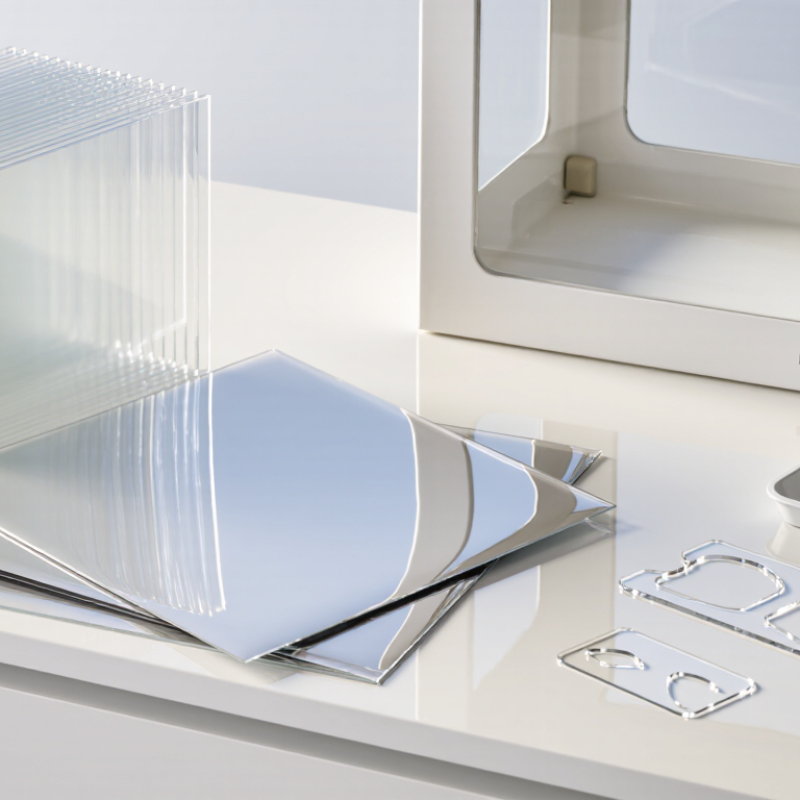
What Is PET Clear Sheet Used For?

What Is PET Clear Sheet?

PET clear sheet is a transparent, rigid sheet made from polyethylene terephthalate, a thermoplastic polymer. Manufacturers produce it by melting PET pellets and extruding them into controlled thicknesses. The material can be glossy, smooth, and highly visible. However, “clear” does not always mean optically perfect.

PET sheet offers useful stiffness, impact resistance, and dimensional stability. It is lighter than glass and easier to cut, fold, or thermoform. Common uses include food trays, retail display covers, product packaging, document protection, electrical insulation, and lightweight interior panels. The report PlasticsEurope: Plastics—The Fast Facts 2023 recorded global plastics production at 400.3 million tonnes in 2022. Packaging remained the largest application sector. PET clear sheet fits this demand because it combines visibility with practical forming performance. Still, heat resistance and chemical compatibility must be checked for each project. I have seen clear sheets haze after unsuitable heating. That detail is easy to overlook.

Tips: Check thickness, surface quality, and forming temperature before production. For packaging, verify food-contact requirements in the target market. PET is recyclable, but collection and sorting determine real recovery. The OECD Global Plastics Outlook reported that only 9% of plastic waste was recycled globally in 2019. Therefore, specify recyclable structures and avoid unnecessary coatings where possible. Some designs still need improvement.

Key Properties of PET Clear Sheet

What Is PET Clear Sheet Used For?

PET clear sheet is used for protective covers, retail displays, packaging windows, machine guards, and printed panels. Its key advantage is balanced performance. The sheet is transparent, stiff, lightweight, and reasonably impact resistant. ASTM D792 test data typically places PET density near 1.33–1.40 g/cm³. Commercial clear grades can also provide visible-light transmission above 85%, depending on thickness and additives.

Clarity matters in visual merchandising. A customer can inspect the product without opening the package. PET also resists moisture and many common chemicals, which supports use in trays and protective barriers. According to PlasticsEurope’s Plastics—The Fast Facts 2024, global plastics production reached about 413.8 million tonnes in 2023. That figure reflects strong processing infrastructure, but it does not guarantee consistent sheet quality. Thickness, surface treatment, and forming temperature still require careful control.

PET clear sheet is easier to fabricate than some rigid alternatives. It can be cut, folded, printed, and thermoformed with suitable equipment. ISO 527 testing is commonly used to evaluate its tensile behavior. However, outdoor exposure may cause yellowing or loss of toughness without UV protection. It is not indestructible. In practical trials, scratches and edge cracking can appear earlier than expected, especially after repeated bending. That small detail is often missed in general product descriptions.

What Is PET Clear Sheet Used For? - Key Properties of PET Clear Sheet
Data Dimension Typical PET Clear Sheet Information Why It Matters Common Uses
Material Polyethylene terephthalate, commonly abbreviated as PET. Provides a combination of clarity, strength, dimensional stability, and chemical resistance. Packaging, product protection, displays, printing, and formed plastic components.
Appearance Clear, transparent sheet with a smooth surface and consistent optical appearance. Allows products, graphics, and printed information to remain clearly visible. Retail packaging windows, overlays, covers, labels, document protection, and display panels.
Typical Thickness Range Approximately 0.10–1.00 mm for many clear-sheet applications. Thickness selection affects stiffness, flexibility, forming performance, and protection level. Thin overlays and packaging windows; thicker protective covers, trays, and inserts.
Density Approximately 1.33–1.40 g/cm³, depending on grade and manufacturing process. Helps estimate material weight and compare sheet consumption during design and production. Lightweight packaging, protective inserts, and transparent fabricated parts.
Transparency High visible-light transmission is possible in clear grades, although the exact value depends on thickness, surface finish, and additives. Supports product presentation and inspection without opening the package. Blister packs, folding cartons with windows, point-of-sale displays, and inspection covers.
Mechanical Strength Good tensile strength and impact resistance compared with many conventional transparent plastics. Helps the sheet resist tearing, cracking, and deformation during handling and use. Protective guards, packaging inserts, hanging displays, and durable printed sheets.
Stiffness Moderate to high stiffness, increasing with sheet thickness and orientation. Maintains shape and provides structural support in flat or formed applications. Rigid packaging windows, document covers, dividers, signage, and trays.
Dimensional Stability Generally good dimensional stability under normal indoor conditions. Reduces shrinkage and shape changes during printing, die-cutting, assembly, and storage. Precision overlays, printed graphics, packaging components, and fitted covers.
Chemical Resistance Resistant to many dilute acids, oils, and common household substances; compatibility should be checked for strong solvents and aggressive chemicals. Supports use where occasional contact with oils, cleaners, or other substances may occur. Product packaging, protective covers, laboratory-related components, and equipment panels.
Moisture Resistance Low water absorption compared with many hygroscopic plastics. Helps maintain appearance and basic performance in humid environments. Food and consumer packaging, printed inserts, labels, and protective sleeves.
Temperature Performance Suitable for normal ambient use; the glass-transition temperature is approximately 67–81°C, while continuous-use limits depend on grade, load, and exposure time. Indicates that high-temperature applications require careful evaluation to prevent softening or distortion. Indoor packaging, displays, covers, and components away from prolonged high heat.
Forming Performance Can be die-cut, scored, folded, thermoformed, and fabricated when the sheet grade is designed for the process. Enables the production of three-dimensional shapes and customized packaging parts. Blisters, trays, clamshells, formed inserts, protective housings, and retail displays.
Printing and Finishing Can support screen printing, digital printing, offset-related processes, laminating, embossing, and die-cutting when surface treatment and ink compatibility are appropriate. Allows clear sheets to combine physical protection with graphics and product information. Overlays, signage, packaging graphics, instruction panels, and point-of-sale materials.
Electrical Insulation Good electrical insulating characteristics under suitable conditions. Provides a transparent barrier between components and users in selected low-voltage applications. Insulating covers, transparent barriers, instrument panels, and electrical component protection.
Hygiene and Cleanability Non-porous surface that can generally be wiped clean with compatible cleaning agents. Supports applications where visibility and surface cleanliness are important. Protective screens, equipment covers, food-related packaging, and display enclosures.
Recyclability PET is widely recognized as a recyclable thermoplastic; actual recycling depends on local collection and processing systems. Can support material-recovery goals when products are designed and sorted appropriately. Packaging, reusable display parts, and products designed for recycling streams.
Key Limitations May scratch, deform under prolonged high heat, and be affected by certain strong solvents or concentrated chemicals. Highlights the need to select the correct grade, thickness, surface treatment, and operating environment. Design evaluation for outdoor exposure, high-temperature equipment, abrasive handling, and chemical contact.
Note: Values are typical reference ranges for general PET clear sheet applications. Actual performance varies by sheet grade, thickness, orientation, surface treatment, and processing conditions.

Common Packaging and Display Applications

What Is PET Clear Sheet Used For?

Common Packaging and Display Applications

PET clear sheet is widely used when products need visibility and moderate protection. Common packaging includes blister packs, folding cartons, clamshells, bakery windows, and protective trays. Its smooth surface supports clean printing and sharp product presentation. It also resists cracking better than many ordinary clear plastics. Grand View Research estimated the global PET packaging market at over USD 40 billion in 2023. However, market reports classify PET products differently, so direct sheet comparisons remain imperfect.

In retail displays, PET sheet becomes shelf dividers, price holders, countertop stands, menu covers, and transparent signage. It is lightweight and easy to die-cut, fold, or thermoform. A clear display can keep labels readable under bright store lighting. Still, clarity alone is not enough. Designers must check haze, thickness, stiffness, and scratch resistance. Smithers’ packaging research continues to identify recyclability and recycled content as major purchasing factors. PET sheet can support those goals, but collection systems and local processing capacity vary.

Tips: Match the sheet grade to its use. Ask for food-contact documentation when packaging touches food. Check thickness before thermoforming. Test printed surfaces for rubbing. A thin sheet saves weight, but it may bend too easily on a crowded shelf. Avoid assuming every transparent PET sheet performs equally. Small differences in coating, finish, and forming temperature can change the final result.

Industrial, Commercial, and Protective Uses

What Is PET Clear Sheet Used For?

PET clear sheet is a transparent material used where visibility, stiffness, and clean presentation matter. In industrial settings, it can protect machine panels, inspection windows, equipment covers, and printed overlays. Its smooth surface supports clear graphics and labels. It also resists many everyday impacts better than ordinary glass. However, it is not unbreakable.

Commercial applications include product displays, menu holders, shelf dividers, packaging inserts, and point-of-sale panels. Retail fixtures often need a surface that looks neat after repeated handling. PET clear sheet helps maintain that appearance while remaining easier to cut and transport than glass. In fabrication work, accurate measurements are essential. A small cutting error can leave visible gaps or sharp edges. Some projects also need heat-forming or printing, so the sheet grade should match the process.

Tips: Choose thickness according to span, handling, and expected impact. Check chemical compatibility before using cleaners or adhesives. Avoid assuming every clear PET sheet has the same heat or UV performance. Outdoor exposure may cause fading or brittleness over time. A sample test is sensible, especially for demanding industrial use. Keep protective film on during cutting and installation. Remove it only after the surface is clean. These details seem minor, but they often decide whether the finished panel looks professional.

Factors for Selecting the Right PET Clear Sheet

What Is PET Clear Sheet Used For?

PET clear sheet is used for product windows, protective covers, printed displays, packaging inserts, and light-duty machine guards. Its transparency helps customers inspect contents without opening the package. The surface also supports clean printing when the correct ink system is selected. PET is lightweight, dimensionally stable, and less brittle than some transparent plastics. Still, it is not automatically suitable for every environment.

Factors for Selecting the Right PET Clear Sheet

Start with the application. Check thickness, clarity, stiffness, forming needs, and expected impact. A thin sheet may work for folding inserts, while a thicker grade suits rigid covers. Surface treatment matters when printing, bonding, or reducing glare. Confirm the working temperature and chemical exposure, especially near oils, cleaning fluids, or heated equipment. Tolerance is easy to overlook. A sheet that is slightly undersized can create gaps, while excessive thickness may complicate cutting. Real testing is better than relying on a data sheet alone. Humidity and storage conditions can also affect processing results.

Tips: Request samples before ordering. Test cutting, bending, printing, and assembly with the actual equipment. Inspect both sides under direct light. Small scratches can become obvious after forming. If the sheet will face outdoor light, ask for verified weathering data. Some assumptions fail here, and changing the material later can be expensive.

What Is PET Clear Sheet Used For?

PET clear sheet is commonly used for packaging, labels, printed graphics, thermoformed parts, and protective overlays. The chart shows representative thickness ranges used for these applications. When selecting a sheet, consider thickness, clarity, stiffness, heat resistance, forming performance, surface treatment, and the required printing or bonding method.

Thickness ranges are indicative industry-use ranges in micrometres (µm); exact specifications vary according to the product design, forming process, and performance requirements.