
For global buyers, packaging is more than a container for ketchup, chili sauce, or salad dressing. It affects shipping, serving speed, brand perception, and waste handling. That is why paper sauce cups deserve closer attention. A well-made Sauce Cup Paper option can offer a clean presentation while supporting efficient portion control. Small details matter.
A responsible buyer should examine paper weight, coating type, rim strength, leak resistance, and lid fit. Samples should be filled, stacked, chilled, and carried before approval. A cup that survives a busy lunch counter may still fail during long-distance transport. Supplier experience becomes visible here. Ask for food-contact documentation, production records, testing methods, and clear material specifications. Independent test results can provide stronger evidence than sales claims. Requirements differ by market, so one certificate cannot answer every question.
Paper cups may reduce reliance on plastic, but performance and disposal conditions must be considered honestly. Some coatings complicate recycling. Local facilities may not accept them. This is an area where optimistic claims need restraint. Global purchasing teams can improve reliability by checking factory capacity, print consistency, minimum order quantities, and delivery history. A practical trial order often reveals more than a polished catalogue. The best choice balances hygiene, usability, cost, and verified compliance. Not every paper cup is suitable. Careful evaluation helps buyers choose a Sauce Cup Paper solution that works from factory line to customer table.
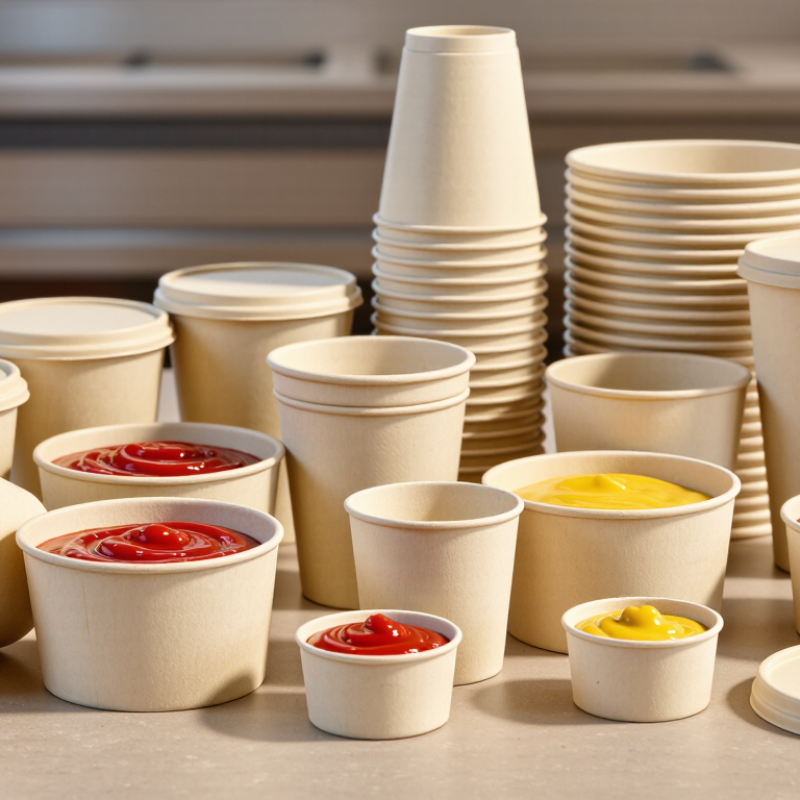
Paper sauce cups are small, formed paperboard containers designed for ketchup, chili oil, gravy, and other portioned sauces. Their walls usually combine paper fibers with a thin moisture barrier. This structure helps prevent softening during short service periods. A fitted lid reduces spills during takeaway delivery.
Function depends on several details. The cup must resist liquid penetration, oil migration, heat, and pressure from stacking. A practical design often includes a rolled rim, stable base, and lid-locking edge. Smaller capacities also support controlled portions and reduce unused sauce.
Grand View Research estimated the global paper cups market at about USD 11.5 billion in 2023. This figure indicates strong demand for paper-based foodservice formats, though it does not measure sauce cups alone.
Material choice still needs careful review. The word “paper” can mislead. Some cups use plastic coatings, which may affect recycling or composting routes. According to FAO statistics, global paper and paperboard production reached roughly 416 million tonnes in 2022. High production capacity supports sourcing, but it does not guarantee responsible supply.
Buyers should verify barrier composition, food-contact documentation, leak testing, and local recovery conditions. In my experience, a cup that performs well in a warehouse may fail after refrigeration and transport. Small tests matter.
Paper sauce cups offer practical benefits for buyers managing different markets, shipping routes, and food-service needs. In my experience, their low weight helps reduce carton volume and transport costs. They also stack neatly, leaving more room in warehouse shelves. A 2-ounce cup suits ketchup or dressing, while larger sizes handle salsa and side portions. Clear sizing makes purchasing and inventory planning easier.
Reliable paper cups need more than an attractive appearance. Buyers should check paper thickness, rim strength, leak resistance, and food-contact documentation. A suitable moisture barrier helps prevent softening during a short takeaway service.
It should also withstand chilled sauces, oily dips, and brief handling. Packaging details matter too. Secure sleeves and clean inner surfaces reduce dust, crushing, and unpleasant surprises on arrival.
Paper is not a perfect solution. Greasy or watery sauces can test weak designs quickly. Recycling options also differ between cities and countries, especially when cups contain barrier coatings. Global buyers should confirm local disposal guidance instead of trusting broad environmental claims.
Sample testing remains valuable: fill the cup, wait twenty minutes, stack several units, and check the base. That small test can reveal more than a product sheet.
Material choice affects strength, recycling options, and food-contact performance. The Food and Agriculture Organization reported global paper and paperboard production of about 417 million tonnes in 2022. This scale supports a mature supply chain, but it does not make every paper cup responsible. Fiber origin, recycled content, and mill traceability still require verification. A cup may look natural while using a difficult-to-separate plastic lining.
Coating selection deserves closer attention. Polyethylene coatings provide reliable moisture resistance and heat sealing, while water-based coatings can support fiber recovery in suitable systems. However, “compostable” does not mean compostable everywhere. Buyers should request coating composition, PFAS statements, and migration test results. The European Food Safety Authority has repeatedly emphasized exposure assessment for chemicals migrating from food-contact materials. Testing should reflect real use, including acidic sauces, oily dressings, temperature, and holding time. Small details matter.
Food safety also depends on manufacturing controls. Suppliers should provide declarations of compliance, batch traceability, GMP records, and third-party laboratory reports. FDA food-contact requirements and European framework rules are useful references, but they are not identical worldwide. Importers must check the destination market’s current rules. Paper fibers can absorb odors, and printing inks may create additional risks if controls are weak. I have seen specifications that mention “food grade” without naming a test method. That wording is not enough. A practical buyer compares barrier performance, recyclability evidence, and documented migration limits before approving samples.
Global buyers should evaluate paper sauce cups beyond appearance. In sourcing projects, I have found supplier consistency matters more than a low first quote. Ask for food-contact documentation, material specifications, and recent batch records. A reliable supplier explains paper weight, coating type, leak resistance, and production tolerances. Request physical samples, not only digital photos. Test them with hot gravy, oily dressing, and refrigerated sauces for several hours. Small details matter. Check rim sealing, stacking stability, lid fit, and odor after filling. Clear answers about lead time, rejected units, and corrective actions indicate practical control.
Compare landed cost rather than unit price. A quote should separate cup cost, printing plates, tooling, packing, freight, and payment terms. Ask whether pricing changes at 10,000, 50,000, and 100,000 units. Minimum order quantities can make a cheap cup expensive for a small launch. Confirm carton dimensions and pallet counts before calculating freight. One overlooked detail can damage margin. I once focused too heavily on the unit price and underestimated storage costs. That mistake changed the supplier comparison.
Define dimensions, fill volume, paper color, coating, and artwork before sampling. For printed cups, request a proof and a production sample. Colors can shift on coated paper. Keep important text away from curved seams and rim areas. Ask for barcode readability when cups enter retail or warehouse systems. Sustainability claims need traceable material records, not attractive wording alone. Require measurable specifications and written approval before mass production. A practical customization plan leaves room for small adjustments. Perfect samples are not always realistic. Consistent production is the real test.
Why Choose Paper Sauce Cups for Global Buyers?
For global buyers, shipping performance matters as much as appearance. Paper sauce cups are lightweight, which can reduce freight weight and handling costs. Nested packing saves carton space. This matters.
However, paper packaging can react badly to humidity, pressure, and temperature changes. During shipment reviews, crushed rims often result from weak cartons or excessive stacking. A sealed outer carton, internal dividers, and clear pallet limits can reduce these risks. Buyers should request samples before placing large orders. They should also check cup dimensions, lid fit, coating details, and food-contact documentation for each destination market. The calculation is not always neat.
Sustainability is another practical concern. Paper cups can support renewable-material goals, especially when responsibly sourced paper is used. Still, a moisture-resistant coating may affect local recycling options. Recyclability depends on the material structure and regional collection systems. Buyers should ask for clear material information instead of trusting broad environmental claims. Paper sauce cups suit dipping sauces, salad dressings, condiments, dessert toppings, and small snack portions. Restaurants use them for takeaway meals, while catering teams place them beside finger foods and buffet trays. They are also useful for sampling sauces at food events. Not every cup fits every application. Thick sauces may need wider openings, while watery contents require reliable leak resistance. Small tests reveal more than attractive product photos.
| Data Dimension | Typical Industry Data | Why It Matters to Global Buyers | Common Applications and Purchasing Considerations |
|---|---|---|---|
| Common Capacities | Approximately 30–120 ml (1–4 fl oz) | Provides portion control while reducing overfilling, food waste, and unnecessary packaging material. | Dipping sauces, ketchup, mayonnaise, salad dressing, gravies, condiments, samples, and small dessert toppings. |
| Typical Paper Material | Food-grade paperboard, commonly around 180–350 gsm, with a moisture-resistant coating | The paperboard provides rigidity, while the coating helps prevent leakage and softening during normal use. | Select the paperboard weight and coating according to sauce viscosity, fill temperature, holding time, and transport conditions. |
| Shipping and Storage Efficiency | Nested, empty cups can be stacked to reduce unused internal volume during transport and warehousing. | Nested packaging generally requires less storage space than assembled containers, helping improve carton utilization and inventory handling. | Useful for foodservice distributors, central kitchens, takeaway operators, catering suppliers, and export shipments with limited warehouse capacity. |
| Lightweight Packaging | A small single-use sauce cup typically uses only a few grams of paperboard, depending on capacity and construction. | Lower packaging weight can support more efficient handling and may reduce transport-related emissions compared with heavier container formats. | Suitable for high-volume meal delivery, quick-service restaurants, airline catering, event catering, and meal-kit portions. |
| Leak and Grease Resistance | Performance depends on the coating, seam design, lid fit, and the temperature and viscosity of the contents. | Matching the barrier specification to the sauce reduces leakage claims, product loss, and customer complaints during delivery. | For oily or watery sauces, buyers should request compatibility testing, filled-cup shelf testing, and transport simulation before large-scale purchasing. |
| Renewable Fiber Content | Paperboard is primarily made from wood fiber, a renewable resource when sourced from responsibly managed forests. | Fiber-based packaging can support sustainability goals and may be easier to communicate to customers than fossil-based plastic packaging. | Request fiber sourcing documentation and review the exact coating, inks, adhesives, and manufacturing process used for the selected specification. |
| Recyclability Considerations | Recyclability depends on local collection systems, food contamination, and whether the barrier coating can be processed by local mills. | A paper appearance alone does not guarantee recyclability in every market; local infrastructure determines the end-of-life outcome. | Confirm accepted materials with the destination market and avoid unsupported claims such as “widely recyclable” without verification. |
| Compostability Considerations | Only products meeting applicable compostability requirements and accepted by the relevant industrial composting system should be described as compostable. | Clear certification and disposal guidance helps prevent greenwashing and reduces confusion for distributors and end users. | If compostability is required, specify the target market, applicable standard, certification route, coating type, and industrial-composting availability. |
| Temperature Range | Many paper sauce cups are designed for ambient or chilled sauces; hot-fill performance varies by material and coating. | Temperature compatibility protects cup strength and barrier performance throughout filling, holding, transport, and serving. | For hot gravy, melted cheese, or heated dressings, require supplier testing at the intended fill temperature and holding time. |
| Lid Compatibility | Available with paperboard, plastic, or other fitted lids depending on the cup design and market requirements. | A secure lid helps reduce spills and supports hygienic delivery, but the lid material affects recycling and sustainability claims. | Check leak resistance, stacking stability, tamper evidence, opening force, and compatibility with automated filling or packing equipment. |
| Customization Options | Common options include printed graphics, capacity, rim diameter, coating type, lid style, carton quantity, and packing format. | Customization can improve portion identification, food presentation, and operational consistency across different markets. | For international orders, confirm print color requirements, food-contact ink compliance, language labeling, carton markings, and minimum order quantities. |
| Quality and Compliance Checks | Typical checks include dimensions, paperboard basis weight, coating adhesion, leak resistance, compression strength, odor, and food-contact suitability. | Documented testing reduces the risk of import delays, leakage complaints, inconsistent filling performance, and non-compliance in the destination market. | Before shipment, buyers should approve production samples, packaging specifications, inspection criteria, and relevant food-contact documentation. |
Note: Values shown are typical industry ranges or purchasing considerations rather than universal specifications. Actual performance depends on cup size, paperboard grade, coating, lid design, filling conditions, transport environment, and local recycling or composting infrastructure.